Revista Mexicana de Ciencias Forestales Vol. 17 (98)
Dasonomía Urbana (2026)
DOI: https://doi.org/10.29298/rmcf.v17i98.1690 Research article
Soil seed bank of shrub and tree species in closed urban landfills Banco de semillas del suelo de especies arbustivas y arbóreas en vertederos urbanos clausurados
Renata Valdes-Alameda1*, Erik Manuel Aldape Becerra1, Jop Ruben Escobedo-Cruz2, Julia Amalia Hernández González2, Homero Garate-Escamilla1 |
Fecha de recepción/Reception date: 14 de mayo de 2026.
Fecha de aceptación/Acceptance date: 18 de septiembre de 2026.
_______________________________
1Universidad Autónoma de Nuevo León, Facultad de Ciencias Forestales. México.
2Bio Nodo. México.
*Autor para correspondencia; correo-e: renatavalameda@gmail.com
*Corresponding author; e-mail: renatavalameda@gmail.com
Abstract
Closed landfills located within the urban matrix face particular challenges for natural regeneration, since the cover soil used in their closure generally lacks a preexisting soil seed bank (SSB), and their isolation limits the arrival of propagules through dispersal. Therefore, their study enhances our understanding of the processes of colonization and regeneration of newly formed habitats in urban environments and helps identify the necessary restoration measures. This study describes and explores differences in the woody species’ SSB at two demolition and construction waste landfills of different sizes (1 and 4.5 ha) and closure durations (15 and 25 years), located in an industrial park in the Monterrey Metropolitan Area, Mexico. A total of six species were recorded, all of which are common in the study area, with a density of 120±57.10 seeds m-2 at the 15-year-old site and 182.86±81.91 seeds m-2 at the 25-year-old site. Species richness and density were similar across the areas (P>0.05), and the spatial pattern of the seeds was clustered at both sites (p<0.001). Neltuma laevigata concentrated the highest abundance at the two landfills. The current SSB represents potential vegetation that is limited in the short term; therefore, it is recommended to supplement it with active ecological restoration efforts using native species of the Tamaulipan thorn scrub.
Keywords: Monterrey Metropolitan Area, seed dispersal, Tamaulipas thorn scrub, urban matrix, Neltuma laevigata (Humb. & Bonpl. ex Willd.) Britton & Rose, ecological restoration.
Resumen
Las áreas de disposición de residuos clausuradas e inmersas en la matriz urbana enfrentan retos particulares para la regeneración natural, ya que el suelo de cobertura utilizado en su cierre carece, generalmente, de un banco de semillas del suelo (BSS) preexistente, y su aislamiento limita la llegada de propágulos por dispersión. Por lo tanto, su estudio contribuye a comprender los procesos de colonización y regeneración de hábitats de reciente formación en el entorno urbano y permite determinar las acciones de rehabilitación necesarias. En este trabajo se describieron y se exploraron las diferencias en el BSS de especies leñosas en dos vertederos de residuos de demolición y construcción con distinto tamaño (1 y 4.5 ha) y tiempo de clausura (15 y 25 años), ubicados en un parque industrial del Área Metropolitana de Monterrey, México. Se registraron en total seis especies, todas comunes del área estudiada, con una densidad de 120±57.10 semillas m-2 en el sitio de 15 años y de 182.86±81.91 semillas m-2 en el de 25 años. La riqueza y densidad fueron similares entre las áreas (P>0.05) y el patrón espacial de las semillas fue agrupado en ambos sitios (p<0.001). Neltuma laevigata concentró la mayor abundancia en los dos vertederos. El BSS actual constituye una vegetación potencial restringida a corto plazo, por lo que se recomienda complementar con acciones de rehabilitación ecológica activa con especies nativas del Matorral espinoso tamaulipeco.
Palabras clave: Área Metropolitana de Monterrey, dispersión de semillas, matorral espinoso tamaulipeco, matriz urbana, Neltuma laevigata (Humb. & Bonpl. ex Willd.) Britton & Rose, rehabilitación ecológica.
Introduction
Waste disposal sites suffer from severe environmental degradation due to the removal of vegetation cover and soil disturbance. When closed, landfills for construction waste or inert materials are typically covered with mineral soil, often sourced from deep soil layers. They are then abandoned, left subject to natural vegetation regeneration processes, which depend on the availability of propagules and the site's soil conditions.
Urban sprawl has incorporated into the city landfills that were previously located on the outskirts; today, these sites serve as vacant lots (with no defined use), green spaces, or industrial zones, depending on site conditions, the type of waste, and urban planning (Hoefer et al., 2016; Vincevica-Gaile et al., 2023). In many cases, they remain unmanaged, which limits or delays vegetation regeneration and, consequently, the provision of ecosystem services. Seed dispersal and the soil seed bank (SSB) are important mechanisms for natural regeneration following disturbances. However, habitat loss and fragmentation caused by urban development limit the arrival of propagules by altering the movement of dispersal vectors (Damschen et al., 2008; Gelmi-Candusso & Hämäläinen, 2019; Mendes et al., 2025).
In these isolated environments, the SSB takes on particular significance, as seeds can remain dormant there for long periods until the conditions are right for germination (Fenner & Thompson, 2009). Its makeup changes over time and across space; for example, studies of closed landfills have documented an increase in species richness directly proportional to the time period during which the landfill has been closed, associated with the accumulation of propagules from the surrounding vegetation (Kim & Lee, 2005; Rebele & Lehmann, 2016; Robinson & Handel, 1993). Therefore, the analysis of the SSB provides crucial information for understanding plant dynamics, as well as for assessing its conservation status, and determining its potential for natural regeneration (Ma et al., 2021).
Closed landfills, which generally lack an initial seed bank in the cover soil (Kim & Lee, 2005), depend almost entirely on the external introduction of propagules to initiate their natural regeneration, which, as mentioned, is limited by the isolation inherent in the urban matrix. In addition, the seedlings of the species that manage to arrive have difficulty taking root due to the city's climate conditions (Kisvarga et al., 2025).
When natural regeneration is insufficient, it can be supplemented with restoration efforts, understood as the functional recovery of the site without necessarily restoring a significant proportion of the biota of a reference ecosystem (Gann et al., 2019). In this regard, studies on plant recovery in closed urban landfills focus on sites that are either actively being restored or undeveloped (Pang et al., 2020; Rawlinson et al., 2004; Wong et al., 2016); also, research on the role of the SSB in natural regeneration within the urban matrix is scarce, with studies indicating a strong presence of seeds from ruderal or exotic plants (Kim & Lee, 2005; Xia et al., 2024). This combination of landfills, SSB, and the urban matrix remains largely unexplored.
The Monterrey Metropolitan Area (MMA) has experienced rapid growth, which has led to the fragmentation of the landscape and the creation of heavily disturbed areas within extensive industrial zones (Jiménez-Pérez et al., 2022). Therefore, the SSB study offers an opportunity to understand primary succession processes in newly formed habitats. The objective of this study was to describe and compare the soil seed bank of shrub and tree species in two urban areas previously used for the disposal of demolition and construction waste (DCW), which differed in size and time since closure, in order to identify their potential for natural regeneration and guide rehabilitation efforts. It was tentatively proposed that the site with the greatest age and the largest surface area would have a greater abundance and density of seeds, as it would provide a greater temporal and spatial opportunity for propagules to enter the SSB.
Materials and Methods
The study was conducted in two adjacent areas that had previously been used as landfills for DCW and graphite, located in an industrial park in the urban area of Apodaca municipality, Nuevo León, Mexico (Figure 1). The vegetation that preceded urban development, as well as the current vegetation found in the surrounding undeveloped areas, consists of Tamaulipan thorn scrub (Instituto Nacional de Estadística, Geografía e Informática [INEGI], 1976). The vegetation patch closest to the landfills (which is regenerating and has sparse vegetation) is located 250 m away; the patch with the greatest apparent vegetation abundance in the immediate vicinity is located 1 500 m away. None of these correspond to mature scrubland, but rather to secondary vegetation (based on a direct site survey).
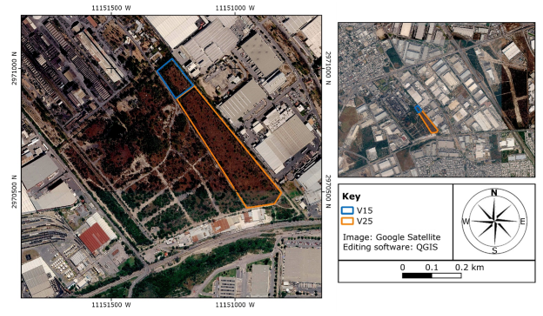
V15 = Landfill closed 15 years ago; V25 = Landfill closed 25 years ago.
Figure 1. Map showing the locations of the study areas.
The region's climate is very hot to hot semiarid (BS1(h')), with annual precipitation ranging from 600 to 650 mm and an average annual temperature of 22 °C (INEGI, 2002). Upon the completion of operations, both sites were covered with similar mineral soil as a closure measure; they also share the same slope, and neither received any post-closure management (precise data withheld by the company in charge). These sites differ in size and in the amount of time that has elapsed since they were closed: the 1-hectare site was closed 15 years ago (V15), while the 4.5-hectare site was closed 25 years ago (V25).
The sampling design initially called for a spacing of 30 m between transects and 40 m between sampling points, following a systematic approach aimed at preventing consecutive points from falling under the influence of the canopy of the same tree. However, at V15, the site’s limited size made it impossible to place an adequate number of sampling points under this scheme; therefore, the interval was adjusted to 20 m in order to achieve representative coverage of the site based on its surface area. Therefore, in each area, three sampling transects were established, spaced 30 m apart, with collection points every 20 m in V15 and every 40 m in V25. Ten soil samples were collected at V15 and 35 at V25 (each measuring 20×20×3 cm, weighing approximately 900 g); this was done following the protocol used in previous SSB studies of the Tamaulipan thorn scrub to facilitate comparisons (Valdes-Alameda et al., 2021). The collection took place in July, during and after most of the summer dispersal events (García-Alanís, 1997), and before the autumn rains associated with germination (Jurado et al., 2006).
The sieving method was used to extract seeds, primarily from tree and shrub species, with 5- and 3-mm sieves. Only those seeds that were viable to the naked eye ―that is, those that were morphologically intact, free of fractures, of appropriate size, and full― were counted. The viability of these was assessed using a cut test; if there were fewer than five seeds, all were tested, and if there were more, a random subsample of five was tested. The seeds were identified with the support of the seed bank at the Graduate School of Forest Sciences (Facultad de Ciencias Forestales) of the Autonomous University of Nuevo León (Universidad Autónoma de Nuevo León).
The data distribution was determined using a Shapiro-Wilk test (Shapiro & Wilk, 1965). Seed density and abundance were compared across sites using the nonparametric Mann-Whitney U test (Mann & Whitney, 1947). The spatial aggregation of seeds was assessed using Morisita’s index (Equation 1), calculated based on the total seed density per sample and standardized (Ip) according to Smith-Gill (1975). The adequacy of the sampling was assessed using species accumulation curves (1 000 permutations). For the accumulation curves, Morisita’s index and the Chao2 richness estimator (Chao, 1987) were calculated using the Vegan package in R, version 2.7-6 (Oksanen et al., 2026). Statistical analyses were performed using the R software, version 4.4.1 (R Core Team, 2026), in the RStudio environment, version 2026.0.40+526 (RStudio Team, 2026).
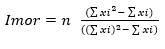 (1)
Where:
Imor = Morisita’s index
n = Number of samples
xi = Number of seeds recorded in sample i
Results and Discussion
The Chao2 estimator for V15 yielded an estimated total richness of 6.80 (95 % confidence interval [CI]: 0.15-13.45), and its species-accumulation curve maintained a positive slope, although with a reduced rate of increase toward the end (Figure 2A). The V25 accumulation curve reached a clearly defined plateau starting at 30 samples (Figure 2B), and its Chao2 estimator was 6.24 (95 % CI: 4.85-7.64), a value very close to that observed. This indicates that the sampling was adequate for V25 but insufficient for V15 due to the smaller number of samples. However, despite the uncertainty in the estimate for V15, the observed species richness at both sites (five in V15 and six in V25) remains low in absolute terms compared to the reference scrubland.
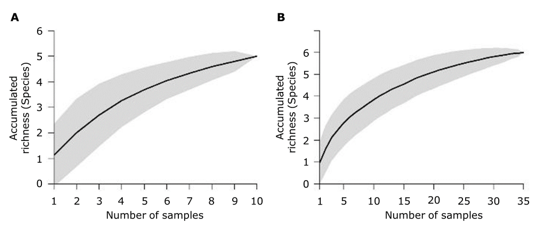
A = V15; B = V25. The black line represents the average accumulated richness, and the shaded area represents the standard deviation.
Figure 2. Species accumulation curve for site V15 and V25.
The data distribution was not normal (P<0.01), so nonparametric tests were used for the comparative analyses. A total of six species were identified, five of them in V15 and six in V25 (U=173.5, P=0.96), while the seed density in V15 was 120±57.10 seeds m-2 and in V25 was 182.86±81.91 seeds m-2 (U=185, P=0.77; Table 1). However, in addition to the sample size, there was a high degree of variation in the density data (Table 1); therefore, this test had limited power to detect actual differences between sites.
Table 1. Comparison of the richness and density of the soil seed bank cited in studies of the Tamaulipan thorn scrub.
Family |
Scientific name |
Common name |
Density (seeds m-2) |
Frecuency (%) |
Density (seeds m-2) |
Frecuency (%) |
V15 (n=10) |
V25 (n=35) |
|||||
Cannabaceae |
Celtis pallida Torr. |
Spiny hackberry |
2.50±2.50 (0.00; 0-25) |
10 % |
2.14±1.58 (0.00; 0-50) |
6 % |
Fabaceae |
Leucaena leucocephala (Lam.) de Wit |
White leadtree |
17.50±11.81 (0.00; 0-100) |
20 % |
1.43±1.43 (0.00; 0-50) |
3 % |
Fabaceae |
Neltuma laevigata (Humb. & Bonpl. ex Willd.) Britton & Rose |
Mesquite |
70.00±39.05 (0.00; 0-375) |
40 % |
82.86±81.39 (0.00; 0-2 850) |
9 % |
Fabaceae |
Parkinsonia aculeata L. |
Retama |
15.00±15.00 (0.00; 0-150) |
10 % |
25.00±10.65 (0.00; 0-250) |
20 % |
Fabaceae |
Vachellia farnesiana (L.) Wight & Arn. |
Huisache |
0.00±0.00 (0.00; 0-0) |
0 % |
2.86±2.24 (0.00; 0-75) |
6 % |
Arecaceae |
Washingtonia filifera (Rafarin) H. Wendl. ex de Bary |
California fan palm |
15.00±10.00 (0.00; 0-100) |
30 % |
68.57±19.40 (25.00; 0-400) |
54 % |
Note: Density values are reported as mean±standard error (median; range). Frequency represents the percentage of samples in which each species was present.
A high proportion of empty samples was observed (50 % at V15 and 37 % at V25), and Morisita’s index showed spatial aggregation at both sites (V15: Ip=0.60; V25: Ip=0.60; P<0.001). The most abundant species at both landfills was Neltuma laevigata (Humb. & Bonpl. ex Willd.) Britton & Rose, accounting for 58 % and 45 % of the total seeds recorded at V15 and V25, respectively, which indicated a marked concentration of a single species. It is important to note that Morisita’s index may primarily reflect the spatial pattern of N. laevigata, given its dominance, since the calculation of the spatial pattern by species proved unstable for those with a small number of seeds.
All the recorded species were characteristic of theTamaulipan thorn scrub or its immediate surroundings, suggesting that the seeds were dispersed from the surrounding vegetation. The presence of Leucaena leucocephala (Lam.) de Wit and Washingtonia filifera (Rafarin) H. Wendl. ex de Bary—introduced species widely used in the region’s urban tree cover (Jiménez-Pérez et al., 2025)—reflects the influence of the urban matrix on the composition of the SSB. L. leucocephala is dispersed by the wind, while W. filifera is dispersed by such generalist wildlife as Passer domesticus (Linnaeus, 1758) and Canis latrans Say, 1823, among others (Spennemann, 2020).
N. laevigata is also a zoochorous species (Jurado et al., 2001), and the fact that a single sample contained the highest density of its seeds (2 850 seeds m-2, equivalent to 98.3 % of the total recorded for the species at that site) is consistent with an aggregated deposition pattern, which is characteristic of this dispersal syndrome. Similarly, the presence of Celtis pallida Torr., which is dispersed by birds (Jurado et al., 2001), indicates that some dispersers use these areas occasionally.
In the MMA, wildlife movement and ecological connectivity have been documented primarily in riparian corridors (Castillo-Muñoz & Guzmán-Hernández, 2021), suggesting that outside of these corridors, zoochorous dispersal in the city—while it does occur—is more limited. The presence of Vachellia farnesiana (L.) Wight & Arn. and Parkinsonia aculeata L., despite their lack of a specialized long-distance dispersal mechanism (Jurado et al., 2001), suggests that other mechanisms—not evaluated in the study—might contribute to their presence.
Given that the cover soil lacked a pre-existing seed bank, the presence of native scrub species suggests active colonization, albeit on a limited scale. The nearest patches of vegetation (250 and 1 500 m away) contain ruderal and early-establishing species in scrub regeneration, which would limit both the distance and the diversity of propagules from tree and shrub taxa available to both sites.
Proximity to sources of propagules and the presence of dispersers favor the introduction of new species into closed landfills (Robinson & Handel, 1993); however, this process also depends on the species richness of the source. For example, at a landfill adjacent to a forest in Berlin, the incorporation of up to 60 % of native taxa was documented over a 20-year period (Rebele & Lehmann, 2016), whereas in urban plots with sparse and distant source vegetation, diversity remained low regardless of the time elapsed (Johnson et al., 2018). Although these findings come from other ecological contexts, they are consistent with the possibility that the quality of the source vegetation—and not just distance—limits colonization at the studied sites.
To provide a frame of reference for interpreting the makeup of the SSB observed at the landfills studied in relation to the potential of the reference ecosystem, we summarize the results of studies on SSB in areas near the study site (Table 2). The species richness observed in this study is lower than that reported for areas with severe erosion (10-12 spp.; Pando-Moreno et al., 2010), although it is of the same order of magnitude. The densities are similar to those reported for regenerating scrubland, but with considerably greater variability. It is important to note that, since no studies on the SSB were found in urban areas of the region, the data come from sites with lower levels of disturbance; therefore, this comparison should be interpreted in light of the methodological differences between studies.
Table 2. Comparison of the richness and density of the soil seed bank as reported in studies of the Tamaulipan thorn scrub.
Author and year |
Site’s condition |
Richness |
Density (seeds m-2) |
Method |
This study |
Closed landfills |
5-6 spp. |
120 a 182 |
Sieving |
Martínez-Adriano et al. (2021) |
Patch of scrub |
30 spp. |
— |
Seedling emergence |
Pando-Moreno et al. (2010) |
With severe erosion and without erosion |
10-12 spp. |
62 a 1 900 |
Sieving |
Valdes-Alameda et al. (2023) |
In regrowth (post-grazing) |
57 spp. |
123 a 277 |
Seedling emergence |
Valdes-Alameda et al. (2021) |
Patch of scrub |
14 spp. |
— |
Sieving |
— = Unrecorded data.
The sieving method used facilitates the recovery of seeds from woody and shrubby species, which are larger than those of herbaceous plants and grasses. This selection was consistent with the study’s focus on the woody component of the SSB. Therefore, it is likely that species diversity—which is also relevant to ecosystem conservation—is underestimated. In addition to this limitation, there are other design-related limitations, as the sampling was conducted during a single season—which prevents the capture of seasonal variation in seed input—and the sites differ in both age and surface area, making it impossible to isolate the individual effect of each factor on the richness and density of the SSB. Furthermore, viability was verified only in a fraction of the seeds through a cutting test; therefore, the total density could include nonviable seeds that were not detected during the initial visual selection.
The methodological decisions were driven by time and resource constraints inherent to the study. Understanding the composition of the SSB is key to guiding restoration or rehabilitation decisions; therefore, it is recommended that future research increase the number of samples and evaluate seasonal variation in accordance with the area’s dispersal and germination seasons. If the focus extends to species with very small seeds, the seedling emergence method—although more time-consuming—would be more appropriate.
There is an opportunity to integrate landfills studied herein into networks of urban green spaces. Despite the observed limitations, the results provide valuable information on the natural regeneration potential of woody plants and are directly applicable to guiding restoration efforts, particularly through reforestation with native species that are attractive to dispersers and are currently absent from the SSB. This would increase ecological connectivity, enrich the seed bank, and reduce the marked concentration of abundance in a single species observed in this study; as a result, it would promote the SSB’s resilience and, with more diverse vegetation, the provision of ecosystem services such as temperature regulation, water recharge, and support for biodiversity. Furthermore, given the abundance of seeds from introduced species, it is likely that these will continue to establish themselves in the short and medium term; therefore, their management, along with that of the existing vegetation, should be considered to reduce competition with native species.
Conclusions
The size of the landfill and the duration of its closure did not result in detectable differences in abundance or density of the SSB; however, the limited statistical power and the fact that the design considers only one site per category prevent us from ruling out a real effect of these variables. Between 15 and 25 years after their closure, both sites have a SSB characterized by low enrichment, high abundance of one species, and the presence of introduced taxa. Given the current makeup of the SSB, spontaneous natural regeneration does not appear to be sufficient to restore a diverse plant community in the short term. Therefore, it is recommended to supplement natural regeneration with restoration efforts based on reforestation.
Acknowledgments
The authors are grateful to the technical staff at Bio Nodo for their assistance in collecting samples for this research.
Conflict of interest
There is no conflict of interest. Homero Gárate Escamilla and Renata Valdes-Alameda declare that they did not participate in the editorial process for the manuscript.
Contribution by author
Renata Valdes-Alameda: development of the original idea, initial drafting of the manuscript, and adaptation to editorial guidelines; Erik Manuel Aldape Becerra and Julia Amalia Hernández González: fieldwork and data analysis; Jop Ruben Escobedo-Cruz and Homero Garate-Escamilla: development of the original idea, revision and editing of the manuscript.
References
Castillo-Muñoz, M., & Guzmán-Hernández, J. L. (2021). Composición y estructura de la comunidad de aves en un corredor ribereño urbano del área metropolitana de Monterrey, Nuevo León, México. Huitzil Revista Mexicana de Ornitología, 22(2), Articulo e-628. https://www.scielo.org.mx/scielo.php?script=sci_arttext&pid=S1870-74592021000200003
Chao, A. (1987). Estimating the population size for capture-recapture data with unequal catchability. Biometrics, 43(4), 783-791. https://doi.org/10.2307/2531532
Damschen, E. I., Brudvig, L. A., Haddad, N. M., Levey, D. J., Orrock, J. L., & Tewksbury, J. J. (2008). The movement ecology and dynamics of plant communities in fragmented landscapes. Proceedings of the National Academy of Sciences, 105(49), 19078-19083. https://doi.org/10.1073/pnas.0802037105
Fenner, M., & Thompson, K. (2009). The ecology of seeds. Cambridge University Press. https://doi.org/10.1017/CBO9780511614101
Gann, G. D., McDonald, T., Walder, B., Aronson, J., Nelson, C. R., Jonson, J., Hallett, J. G., Eisenberg, C., Guariguata, M. R., Liu, J., Hua, F., Echeverría, C., Gonzales, E., Shaw, N., Decleer, K., & Dixon, K. W. (2019). International principles and standards for the practice of ecological restoration. Second edition. Restoration Ecology, 27(S1), S1–S46. https://doi.org/10.1111/rec.13035
García-Alanís, L. C. (1997). Estudio fenológico y de crecimiento de once especies leñosas del matorral espinoso tamaulipeco en Linares, Nuevo León, México [Tesis de Maestría en Ciencias Forestales, Universidad Autónoma de Nuevo León]. Repositorio universitario UANL. http://eprints.uanl.mx/7770/1/1020120181.PDF
Gelmi-Candusso, T. A., & Hämäläinen, A. M. (2019). Seeds and the city: the interdependence of zoochory and ecosystem dynamics in urban environments. Frontiers in Ecology and Evolution, 7, Article 41. https://doi.org/10.3389/fevo.2019.00041
Hoefer, W., Gallagher, F., Hyslop, T., Wibbelt, T. J., & Ravit, B. (2016). Environmental reviews and case studies: Unique landfill restoration designs increase opportunities to create urban open space. Environmental Practice, 18(2), 106-115. https://doi.org/10.1017/S1466046616000090
Instituto Nacional de Estadística, Geografía e Informática. (1976). Carta uso del suelo y vegetación. Apodaca, escala 1:50 000, Clave G14C16 (Cartas de Uso del Suelo y Vegetación). Instituto Nacional de Estadística, Geografía e Informática. https://www.inegi.org.mx/app/biblioteca/ficha.html?upc=702825656348&utm
Instituto Nacional de Estadística, Geografía e Informática. (2002). Condiciones geográficas y medio ambiente natural de la zona metropolitana. En Instituto Nacional de Estadística, Geografía e Informática (Ed.), Estadísticas del medio ambiente de la zona metropolitana de Monterrey (pp. 15-19). Instituto Nacional de Estadística y Geografía. https://www.inegi.org.mx/contenidos/productos/prod_serv/contenidos/espanol/bvinegi/productos/historicos/181/702825480486/702825480486_5.pdf
Jiménez-Pérez, J., Jiménez-Quintana, P., Alanís-Rodríguez, E., Martínez-Adriano, C. A., Mora-Olivo, A., & Rubio-Camacho, E. (2025). Estructura del arbolado urbano en parques y calzadas de San Pedro Garza García, México. Revista Forestal Mesoamericana Kurú, 22(51), 22-32. https://doi.org/10.18845/rfmk.v22i51.8059
Jiménez-Pérez, J., Sandoval-García, R., Alanís-Rodríguez, E., Yerena-Yamallel, J. I., & Aguirre-Calderón, O. A. (2022). Dinámica de cambio en ecosistemas urbanos y periurbanos en el área metropolitana de Monterrey, México. Revista Cubana de Ciencias Forestales, 10(3), 278-291. https://dialnet.unirioja.es/servlet/articulo?codigo=9539664
Johnson, A. L., Borowy, D., & Swan, C. M. (2018). Land use history and seed dispersal drive divergent plant community assembly patterns in urban vacant lots. Journal of Applied Ecology, 55(1), 451-460. https://doi.org/10.1111/1365-2664.12958
Jurado, E., Estrada, E., & Mole s̀, A. (2001). Characterizing plant attributes with particular emphasis on seeds in Tamaulipan thornscrub in semi-arid Mexico. Journal of Arid Environments, 48(3), 309-321. https://doi.org/10.1006/jare.2000.0762
Jurado, E., García, J. F., Flores, J., & Estrada, E. (2006). Leguminous seedling establishment in Tamaulipan thornscrub of northeastern Mexico. Forest Ecology and Management, 221(1-3), 133-139. https://doi.org/10.1016/j.foreco.2005.09.011
Kim, K. D., & Lee, E. J. (2005). Soil seed bank of the waste landfills in South Korea. Plant and Soil, 271(1), 109-121. https://doi.org/10.1007/s11104-004-2159-2
Kisvarga, S., Horotán, K., Neményi, A., Jana, T., Istvánfi, Z., & Orlóci, L. (2025). The ecology of urban vegetation: Trade-offs, stressors, and adaptive strategies. Environmental and Sustainability Indicators, 28, Article 100887. https://doi.org/10.1016/j.indic.2025.100887
Ma, M., Collins, S. L., Ratajczak, Z., & Du, G. (2021). Soil seed banks, alternative stable state theory, and ecosystem resilience. BioScience, 71(7), 697-707. https://doi.org/10.1093/biosci/biab011
Mann, H. B., & Whitney, D. R. (1947). On a test of whether one of two random variables is stochastically larger than the other. The Annals of Mathematical Statistics, 18(1), 50-60. https://www.jstor.org/stable/2236101
Martínez-Adriano, C. A., Jurado, E., Flores, J., Estrada-Castillon, E., & Gonzalez-Rodriguez, H. (2021). Effect of induced warming on seedling emergence of Tamaulipan thornscrub at northeastern Mexico. Flora, 285, Article 151965. https://doi.org/10.1016/j.flora.2021.151965
Mendes, S. B., Olesen, J. M., Nogales, M., Marrero, P., Romero, J., Nieves, C., & Heleno, R. (2025). Urbanization of seed dispersal networks. Conservation Biology, 39(6), Article e70097. https://doi.org/10.1111/cobi.70097
Oksanen, J., Simpson, G. L., Blanchet, F. G., Kindt, R., Legendre, P., Minchin, P. R., O'Hara, R. B., Solymos, P., Stevens, M. H. H., Szoecs, E., Wagner, H., Barbour, M., Bedward, M., Bengtsson, H., Bolker, B., Borcard, D., Borman, T., Carvalho, G., Chirico, M., … & Weedon, J. (2026). vegan: Community Ecology Package (version 2.7-6) [Computer software]. Comprehensive R Archive Network. https://doi.org/10.32614/CRAN.package.vegan
Pando-Moreno, M., Jurado, E., Castillo, D., Flores, J., & Estrada, E. (2010). Physical crust does not affect soil seed bank. Arid Land Research and Management, 24(3), 263-266. https://doi.org/10.1080/15324981003744966
Pang, C.-C., Lo, W.-F., Yan, R. W.-M., & Hau, B. C.-H. (2020). Plant community composition on landfill sites after multiple years of ecological restoration. Landscape Research, 45(4), 458-469. https://doi.org/10.1080/01426397.2019.1674266
R Core Team. (2026). R: A Language and Environment for Statistical Computing (Version 4.4.1) [Computer software]. R Foundation for Statistical Computing. https://doi.org/10.32614/R.manuals
Rawlinson, H., Dickinson, N., Nolan, P., & Putwain, P. (2004). Woodland establishment on closed old-style landfill sites in N.W. England. Forest Ecology and Management, 202(1-3), 265-280. https://doi.org/10.1016/j.foreco.2004.07.034
Rebele, F., & Lehmann, C. (2016). Twenty years of woodland establishment through natural succession on a sandy landfill site in Berlin, Germany. Urban Forestry & Urban Greening, 18, 182-189. https://doi.org/10.1016/j.ufug.2016.06.006
Robinson, G. R., & Handel, S. N. (1993). Forest restoration on a closed landfill: rapid addition of new species by bird dispersal. Conservation Biology, 7(2), 271-278. https://doi.org/10.1046/j.1523-1739.1993.07020271.x
RStudio Team. (2026). RStudio: Integrated Development Environment for R (Version 2026.04.0+526) [Computer software]. Posit Software, PBC. https://dailies.rstudio.com/version/2026.04.0+526/
Shapiro, S. S., & Wilk, M. B. (1965). An analysis of variance test for normality (complete samples). Biometrika, 52(3-4), 591-611. https://doi.org/10.1093/biomet/52.3-4.591
Smith-Gill, S. J. (1975). Cytophysiological basis of disruptive pigmentary patterns in the leopard frog, Rana pipiens. II. Wild type and mutant cell specific patterns. Journal of Morphology, 146(1), 35-54. https://doi.org/10.1002/jmor.1051460103
Spennemann, D. H. R. (2020). Palms fanning out: a review of the ecological provisioning services provided by Washingtonia filifera and W. robusta in their native and exotic settings. Plant Ecology & Diversity, 13(3-4), 289-324. https://doi.org/10.1080/17550874.2020.1819465
Valdes-Alameda, R., Jurado, E., Flores, J., & Estrada, E. (2023). Banco de semillas del suelo bajo individuos aislados de especies arbóreas del Matorral Espinoso Tamaulipeco. Revista Mexicana de Ciencias Forestales, 14(79), 31-57. https://doi.org/10.29298/rmcf.v14i79.1344
Valdes-Alameda, R., Jurado, E., Flores, J., Pando-Moreno, M., Estrada, E., & Gurvich, D. E. (2021). Densidad de semillas y plántulas de Zanthoxylum fagara en México y Zanthoxylum coco en Argentina: influencia de plantas bajo las cuales ocurren y borde de la vegetación. Botanical Sciences, 99(1), 67-79. https://doi.org/10.17129/botsci.2636
Vincevica-Gaile, Z., Burlakovs, J., Fonteina-Kazeka, M., Wdowin, M., Hanc, E., Rudovica, V., Krievans, M., Grinfelde, I., Siltumens, K., Kriipsalu, M., Aouissi, H. A., Gaagai, A., & Zahoor, M. (2023). Case study-based integrated assessment of former waste disposal sites transformed to green space in terms of ecosystem services and land assets recovery. Sustainability, 15(4), Article 3256. https://doi.org/10.3390/su15043256
Wong, J. T.-F., Chen, X.-W., Mo, W.-Y., Man, Y.-B., Ng, C. W.-W., & Wong, M.-H. (2016). Restoration of plant and animal communities in a sanitary landfill: A 10-year case study in Hong Kong. Land Degradation & Development, 27(3), 490-499. https://doi.org/10.1002/ldr.2402
Xia, S., Zhang, S., Cui, Y., Gao, Z., Song, K., & Da, L. (2024). Spatial variations of soil seed banks in Shanghai’s urban wasteland: a gradient analysis of urbanization effects. PeerJ, 12, Article e18764. https://doi.org/10.7717/peerj.18764
Todos los textos publicados por la Revista Mexicana de Ciencias Forestales –sin excepción– se distribuyen amparados bajo la licencia Creative Commons 4.0 Atribución-No Comercial (CC BY-NC 4.0 Internacional), que permite a terceros utilizar lo publicado siempre que mencionen la autoría del trabajo y a la primera publicación en esta revista.