Revista Mexicana de Ciencias Forestales Vol. 17 (98)
Dasonomía Urbana (2026)
DOI: https://doi.org/10.29298/rmcf.v17i98.1653 Research Note
El papel de la comunicación científica en la gestión del arbolado urbano The role of scientific communication in urban tree management
Miguel Ángel Pequeño Ledezma1,2, Eduardo Alanís Rodríguez1*, Paulina Jiménez Quintana3, Alejandro Collantes Chávez-Costa4 |
Fecha de recepción/Reception date: 26 de febrero de 2026.
Fecha de aceptación/Acceptance date: 22 de julio de 2026.
_______________________________
1Universidad Autónoma de Nuevo León, Facultad de Ciencias Forestales. México.
2Conciencia, Plataforma de Investigación y Divulgación Científica. México.
3Universidad Autónoma de Nuevo León, Facultad de Ciencias Políticas y Administración Pública. México.
4Universidad Autónoma del Estado de Quintana Roo, División de Ciencias Multidisciplinares Cozumel. México.
*Autor para correspondencia; correo-e: eduardoforestal@gmail.com
*Corresponding author; e-mail: eduardoforestal@gmail.com
Abstract
Urban tree management requires technical decisions regarding species selection, planting, pruning, risk assessment, removal, and renewal. These interventions impact public spaces and can lead to disagreements when their rationale is not clearly communicated. This research note describes and analyzes the role of scientific communication as a bridge between specialized knowledge, stakeholders, and decision-making. Communication can be carried out using various tools, such as infographics, fact sheets, workshops, site visits, social media, videos, citizen science, and interviews, the appropriateness of which depends on the objective, the audience, and the type of interaction sought. A conceptual sequence is proposed, comprising knowledge generation, multi-format communication, understanding and adoption, informed participation, and evidence-based management. This model incorporates feedback loops between management outcomes, stakeholder responses, and communication strategies. Interviews with specialists are a useful tool for contextualizing technical criteria, but they are not inherently superior to other formats, and their contribution must be evaluated using verifiable indicators. Assessment must distinguish between the scope of outreach and its effects, taking into account indicators of reception, accessibility, understanding of technical criteria, trust, willingness to engage in dialogue, and verifiable changes in management practices. Gaps remain in measuring understanding, trust, participation, and changes in management practices, especially in Latin American cities.
Keywords: Social appropriation of knowledge, public communication of science, environmental governance, green infrastructure, citizen participation, public policies.
Resumen
La gestión del arbolado urbano requiere decisiones técnicas sobre selección de especies, plantación, poda, evaluación del riesgo, remoción y renovación. Estas intervenciones inciden en el espacio público y pueden generar desacuerdos, cuando sus fundamentos no se comunican con claridad. Esta nota de investigación describe y analiza el papel de la comunicación científica como vínculo entre el conocimiento especializado, los actores involucrados y la toma de decisiones. La comunicación puede desarrollarse con diferentes herramientas, como infografías, fichas técnicas, talleres, recorridos, redes sociales, videos, ciencia ciudadana y entrevistas, cuya pertinencia depende del objetivo, la audiencia y el tipo de interacción buscado. Se propone una secuencia conceptual integrada por la generación de conocimiento, comunicación multiformato, comprensión y apropiación, participación informada, y gestión basada en evidencia. Este modelo incorpora la retroalimentación entre los resultados del manejo, las respuestas de los actores y las estrategias de comunicación. Las entrevistas a especialistas son una herramienta útil para contextualizar criterios técnicos, pero no son intrínsecamente superiores a otros formatos y su contribución se evalúa mediante indicadores verificables. La evaluación debe distinguir entre el alcance de la divulgación y sus efectos, además de considerar indicadores de recepción, accesibilidad, comprensión de criterios técnicos, confianza, disposición al diálogo y cambios verificables en las prácticas de gestión. Persisten vacíos sobre la medición de la comprensión, confianza, participación y cambios en las prácticas de manejo, especialmente en ciudades latinoamericanas.
Palabras clave: Apropiación social del conocimiento, comunicación pública de la ciencia, gobernanza ambiental, infraestructura verde, participación ciudadana, políticas públicas.
Introduction
Urban trees provide microclimate regulation, heat island mitigation, carbon sequestration, aesthetic value, and benefits for human health and well-being (Jabbar et al., 2022; Lee & Kim, 2023; Martínez-Trinidad et al., 2021). Their management involves decisions regarding species selection, planting, maintenance, pruning, risk assessment, removal, and renewal. These actions alter public spaces, require resources, and can spark controversy when technical criteria are not explained in a timely manner or when relevant stakeholders are not identified (Ordóñez-Barona et al., 2022; Sousa-Silva et al., 2023).
Science communication has assumed a strategic role in strengthening the relationship between science, public policy, and the public (Guertin et al., 2021). Various authors agree that public communication of science should not be viewed merely as a process of information transmission, but rather as a space for interaction that fosters understanding, deliberation, and the social appropriation of scientific knowledge (Bucchi, 1998; Guertin et al., 2021). This approach is particularly relevant to urban environmental issues, where technical decisions often have direct implications for the daily lives of the population (Martin et al., 2024).
Literature on science communication indicates that narrative and dialogic formats—such as interviews with scientists—can help strengthen the credibility and social legitimacy of scientific knowledge, as well as facilitate its integration into public decision-making (Cologna et al., 2025; Intemann, 2023; National Academies of Sciences, Engineering, and Medicine [NASEM], 2017). By presenting scientific evidence through expert voices and concrete experiences, this type of strategy promotes an understanding of the technical and methodological criteria underpinning proper management (Cologna et al., 2025; Taddicken, 2025).
Scientific communication can bridge the gap between specialized knowledge and public action by translating evidence, acknowledging uncertainties, and enabling deliberation on management alternatives (Cash et al., 2003). However, few studies compare formats or measure their impact on specific arboricultural decisions, particularly in Latin American cities (Martin et al., 2024). This scientific note aims to describe the mechanisms through which scientific communication can support urban tree management, distinguish interviews from other tools, and propose components and indicators to evaluate their contribution.
Science communication
Science communication plays a central role in constructing social knowledge by facilitating the understanding, interpretation, and adoption of scientific knowledge by various social actors (Bucchi, 1998; Irwin, 2021). Indeed, science communication is a formal responsibility for researchers, as the bodies and institutions funding research projects encourage—or even mandate—that scientists engage in communicating science (Borowiec, 2023).
In Mexico, the Secretariat of Science, Humanities, Technology, and Innovation (Secretaría de Ciencia, Humanidades, Tecnología e Innovación, Secihti) promotes science communication through the National Science Communication Strategy and by requiring researchers belonging to the National System of Researchers (Sistema Nacional de Investigadores e Investigadoras, SNII) to engage in public communication of knowledge (Secretaría de Ciencia, Humanidades, Tecnología e Innovación [Secihti], 2026). This institutional framework recognizes science communication as a key component in strengthening the link between science and society, particularly regarding issues with direct implications for daily life, such as urban forestry.
Within this institutional framework, the selection of communication tools must align with specific urban forest management decisions. Regarding species selection, communication must address climate adaptation, available space, water requirements, and infrastructure compatibility; regarding pruning and removal, it must distinguish between routine maintenance, risk management, and the loss of ecosystem functions; and regarding planting, it must clarify that survival depends on plant quality, the planting site, the timing, irrigation, and follow-up care—not merely on the number of trees planted (Alanís-Rodríguez et al., 2023; Sousa-Silva et al., 2023).
Tools for communication and the social appropriation of knowledge
Scientific communication can take place through infographics, technical fact sheets, workshops, site visits, social media, videos, citizen science, and interviews. No single format is universally superior; their suitability depends on the objective, the audience, the complexity of the topic, and the type of interaction sought (Borowiec, 2023; NASEM, 2017). Appropriation requires understanding and interpreting information before applying it to practices, arguments, or decisions.
Interviews with specialists are useful for contextualizing issues, clarifying concepts, and explaining the reasoning behind a recommendation. However, they can oversimplify controversies, overlook relevant voices, or rely too heavily on perceived authority. Quality in this context demands transparent sources, alignment with evidence, and an acknowledgment of uncertainties (Cologna et al., 2025; Intemann, 2023; Taddicken, 2025).
The social appropriation of scientific knowledge also helps strengthen shared responsibility in urban ecosystem management by promoting a shared vision of urban trees as a public good and an essential component of urban green infrastructure (Turnhout et al., 2020). When society recognizes the ecological, social, and functional value of urban trees, support for conservation-oriented public policies increases, as does the willingness to participate in monitoring, maintaining, and caring for the urban tree canopy.
Urban tree management and governance
Urban tree management involves authorities, technical staff, specialists, neighborhood organizations, the media, and users of public spaces. These stakeholders hold distinct responsibilities, knowledge, and interests; therefore, communication must be tailored to each audience without compromising the underlying scientific basis (Cash et al., 2003; Turnhout et al., 2020).
Stakeholder experiences can provide context regarding the local area and the effects of an intervention, yet they do not replace technical evidence, nor should they be automatically assumed to be correct. Governance requires the integration of scientific information, operational experience, and social perceptions through transparent procedures when making decisions on pruning, removal, species selection, and maintenance (Davies et al., 2015; Sousa-Silva et al., 2023).
Literature on urban green infrastructure notes that urban trees fulfill ecological, social, and cultural functions that go beyond the provision of ecosystem services; consequently, their management must rely on holistic, participatory, and adaptive approaches (Elmqvist et al., 2015; Kabisch et al., 2017). An informed citizen and capable of influencing decision-making processes fosters the implementation of more robust public policies aligned with urban sustainability and environmental justice (Turnhout et al., 2020).
Furthermore, urban tree governance grounded in scientific evidence contributes to improved long-term planning, the design of technical regulations, and the allocation of resources for tree maintenance and conservation (Davies et al., 2015; Sadeghian & Vardanyan, 2013). In this context, science communication serves as an operational bridge between academic research and public action, enabling knowledge generated within the scientific community to be effectively incorporated into the day-to-day management of urban trees and the creation of more resilient, livable cities.
Conceptual model and outcome evaluation
The relationship between communication and management is not automatic. A five-component sequence is proposed: (1) Knowledge generation and systematization; (2) Multi-format communication tailored to stakeholders; (3) Understanding and internalization; (4) Informed participation; and (5) Evidence-based management and governance. Feedback loops allow management outcomes and stakeholder responses to shape technical questions and communication strategies (Figure 1).
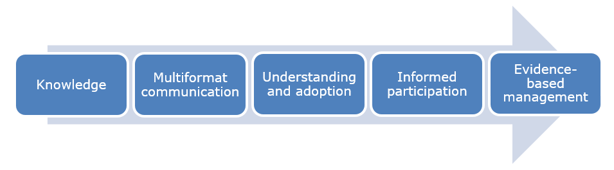
Figure 1. Conceptual model of scientific communication applied to urban tree management.
Evaluation must distinguish between dissemination and impact. Metrics such as the number of reproductions, attendees, or distributed materials describe reach but do not demonstrate understanding or changes in management. It is advisable to measure reception and accessibility; comprehension of technical concepts and criteria; trust, transparency, and willingness to engage in dialogue; and verifiable changes in protocols, practices, citizen requests, monitoring activities, or the reasoned acceptance of decisions.
Initiatives based on interviews should be classified as outreach experiences unless they document a baseline, observable objectives, audience characteristics, and indicators regarding understanding, trust, participation, and potential management changes. Attribution requires caution, as outcomes also depend on regulations, resources, operational capacities, and site-specific conditions.
Gaps remain regarding the comparison of formats, the validation of indicators, and the durability of communication effects. There is a need for longitudinal studies, analyses of unintended outcomes, and more extensive documentation of Latin American cities, where municipal capacities, social conditions, and information availability differ from those in more extensively studied regions.
Conclusions
Scientific communication can support urban tree management when it is linked to concrete decisions, identifies relevant stakeholders, and makes management criteria, alternatives, and uncertainties explicit. Interviews allow for the contextualization of knowledge, but they are not inherently more effective, nor do they constitute evidence of impact without evaluation. The proposed model links knowledge, multi-format communication, understanding and ownership, informed participation, and evidence-based management through feedback. Its contribution lies in shifting the discussion from the general dissemination of benefits to the evaluation of specific issues regarding species selection, planting, pruning, risk, and removal. Future research should compare formats, validate indicators, and document Latin American experiences.
Conflict of interest
The authors declare no conflict of interest. Miguel Ángel Pequeño Ledezma and Eduardo Alanís Rodríguez declare that they did not participate in any stage of the article's editorial process.
Contribution by author
Miguel Ángel Pequeño Ledezma and Eduardo Alanís Rodríguez: development of the original idea and initial drafting of the manuscript; Paulina Jiménez Quintana and Alejandro Collantes Chávez-Costa: supplementation of information, critical review, adaptation of the manuscript to editorial guidelines, and final review. All authors approved the final version of the manuscript.
References
Alanís-Rodríguez, E., Mora-Olivo, A., Jiménez-Pérez, J., & Cuéllar-Rodríguez, G. (2023). Uso de árboles nativos en áreas verdes urbanas: tendencias en el noreste de México. Revista Mexicana de Ciencias Forestales, 14(76), 4-21. https://doi.org/10.29298/rmcf.v14i76.1314
Borowiec, B. G. (2023). Ten simple rules for scientists engaging in science communication. PLoS Computational Biology, 19(7), Article e1011251. https://doi.org/10.1371/journal.pcbi.1011251
Bucchi, M. (1998). Science and the media. Alternative routes in scientific communication (1st ed.). Routledge. https://doi.org/10.4324/9780203064870
Cash, D. W., Clark, W. C., Alcock, F., Dickson, N. M., Eckley, N., Guston, D. H., Jäger, J., & Mitchell, R. B. (2003). Knowledge systems for sustainable development. Proceedings of the National Academy of Sciences, 100(14), 8086-8091. https://doi.org/10.1073/pnas.1231332100
Cologna, V., Mede, N. G., Berger, S., Besley, J., Brick, C., Joubert, M., Maibach, E. W., Mihelj, S., Oreskes, N., Schäfer, M. S., van der Linden, S., Aziz, N. I. A., Abdulsalam, S., Shamsi, N. A., Aczel, B., Adinugroho, I., Alabrese, E., Aldoh, A., Alfano, M., … Zwaan, R. A. (2025). Trust in scientists and their role in society across 68 countries. Nature Human Behaviour, 9, 713-730. https://doi.org/10.1038/s41562-024-02090-5
Davies, C., Hansen, R., Rall, E., Pauleit, S., Lafortezza, R., De Bellis, Y., Santos, A., & Tosics, I. (2015). Green infrastructure planning and implementation. The status of European green space planning and implementation based on an analysis of selected European city-regions (GREEN SURGE Report 5.1). Centro Universitario Internacional de Barcelona. https://doi.org/10.13140/RG.2.1.1723.0888
Elmqvist, T., Setälä, H., Handel, S. N., van der Ploeg, S., Aronson, J., Blignaut, J. N., Gómez-Baggethun, E., Nowak, D. J., Kronenberg, J., & de Groot, R. (2015). Benefits of restoring ecosystem services in urban areas. Current Opinion in Environmental Sustainability, 14, 101-108. https://doi.org/10.1016/j.cosust.2015.05.001
Guertin, L., Theveny, K., & Barber, D. (2021). Virtual informal learning and community building via nature-themed podcast discussions. The Bulletin of the Ecological Society of America, 102(1), Article e01798. https://doi.org/10.1002/bes2.1798
Intemann, K. (2023). Science communication and public trust in science. Interdisciplinary Science Reviews, 48(2), 350-365. https://doi.org/10.1080/03080188.2022.2152244
Irwin, A. (2021). Risk, science and public communication. Third-order thinking about scientific culture. In M. Bucchi & B. Trench (Eds.), Routledge handbook of public communication of science and technology (3rd ed., pp. 199-212). Routledge. https://doi.org/10.1177/0963662507081240
Jabbar, M., Yusoff, M. M., & Shafie, A. (2022). Assessing the role of urban green spaces for human well-being: a systematic review. GeoJournal, 87, 4405-4423. https://doi.org/10.1007/s10708-021-10474-7
Kabisch, N., Korn, H., Stadler, J., & Bonn, A. (Eds.). (2017). Nature-based solutions to climate change adaptation in urban areas. Linkages between science, policy and practice. Springer Nature. https://doi.org/10.1007/978-3-319-56091-5
Lee, E., & Kim, G. (2023). Green space ecosystem services and value evaluation of three-dimensional roads for sustainable cities. Land, 12(2), Article 505. https://doi.org/10.3390/land12020505
Martin, A. J. F., Olson, L. G., & Almas, A. D. (2024). Knowledge translation for the advancement of practice: A survey of facilitators and barriers in arboriculture and urban forestry. Urban Forestry & Urban Greening, 94, Article 128242. https://doi.org/10.1016/j.ufug.2024.128242
Martínez-Trinidad, T., Hernández-López, P., López-López, S. F., & Mohedano-Caballero, L. (2021). Diversidad, estructura y servicios ecosistémicos del arbolado en cuatro parques de Texcoco mediante i-Tree Eco. Revista Mexicana de Ciencias Forestales, 12(67), 202-223. https://doi.org/10.29298/rmcf.v12i67.880
National Academies of Sciences, Engineering, and Medicine. (2017). Communicating science effectively. A research agenda. The National Academies Press. https://doi.org/10.17226/23674
Ordóñez-Barona, C., Wolf, K., Kowalski, J. M., Kendal, D., Byrne, J. A., & Conway, T. M. (2022). Diversity in public perceptions of urban forests and urban trees: A critical review. Landscape and Urban Planning, 226, Article 104466. https://doi.org/10.1016/j.landurbplan.2022.104466
Sadeghian, M. M., & Vardanyan, Z. (2013). The benefits of urban parks, a review of urban research. Journal of Novel Applied Sciences, 2(8), 231-237. https://pub-victoria.escribemeetings.com/filestream.ashx?DocumentId=101392
Secretaría de Ciencia, Humanidades, Tecnología e Innovación. (2026). SECIHTI presenta Estrategia Nacional de Divulgación de la Ciencia: jornadas permanentes por las Ciencias y las Humanidades. Gobierno de México. https://secihti.mx/sala-de-prensa/secihti-presenta-estrategia-nacional-de-divulgacion-de-la-ciencia
Sousa-Silva, R., Duflos, M., Ordóñez-Barona, C., & Paquette, A. (2023). Keys to better planning and integrating urban tree planting initiatives. Landscape and Urban Planning, 231, Article 104649. https://doi.org/10.1016/j.landurbplan.2022.104649
Taddicken, M. (2025). Science communication and public trust in science through an audience-centered quality perspective. Current Opinion in Psychology, 68, Article 102235. https://doi.org/10.1016/j.copsyc.2025.102235
Turnhout, E., Metze, T., Wyborn, C., Klenk, N., & Louder, E. (2020). The politics of co-production: participation, power, and transformation. Current Opinion in Environmental Sustainability, 42, 15-21. https://doi.org/10.1016/j.cosust.2019.11.009
Todos los textos publicados por la Revista Mexicana de Ciencias Forestales –sin excepción– se distribuyen amparados bajo la licencia Creative Commons 4.0 Atribución-No Comercial (CC BY-NC 4.0 Internacional), que permite a terceros utilizar lo publicado siempre que mencionen la autoría del trabajo y a la primera publicación en esta revista.