Revista Mexicana de Ciencias Forestales Vol. 17 (98)
Dasonomía Urbana (2026)
DOI: https://doi.org/10.29298/rmcf.v17i98.1639 Research article
Quantification of ecosystem services and economic valuation of the urban forest in Tapachula, state of Chiapas Cuantificación de servicios ecosistémicos y valoración económica del arbolado urbano en Tapachula, Chiapas
Vincenzo Bertolini1, Tomás Martínez-Trinidad2*, Carlos Mario Almeida-Cerino1, Oscar Jáuregui Ortiz3, Raúl de Jesús Jáuregui Rodriguez3 |
Fecha de recepción/Reception date: 10 de febrero de 2026.
Fecha de aceptación/Acceptance date: 1 de junio de 2026.
_______________________________
1El Colegio de la Frontera Sur (ECOSUR), Unidad Tapachula. México.
2Colegio de Postgraduados, Campus Montecillo. México.
3Agro-Foresterya y Desarrollo S. C. México.
*Autor para correspondencia; correo-e: tomtz@colpos.mx
*Corresponding author; e-mail: tomtz@colpos.mx
Abstract
Urban trees provide multiple ecosystem services that help mitigate the environmental impacts associated with urbanization. The objective of this study was to estimate tree canopy cover and to evaluate the main ecosystem services provided by the urban forest of the city of Tapachula, Chiapas, using the i-Tree Canopy and i-Tree Eco tools. Canopy cover was estimated by classifying 2 003 random points over 2022 satellite imagery, while ecosystem services were assessed using a previous inventory of 2 477 trees. The city showed a tree canopy cover of 31.36 % over a total area of 66.23 km2. Urban trees stored an estimated total of 150.35 kt of carbon and showed an annual sequestration of 5.98 kt, equivalent to 21.95 kt of CO2 per year. In addition, a total annual removal of 173.04 t of atmospheric pollutants was estimated, with an associated economic value of approximately 9.35 million Mexican pesos. In hydrological terms, urban trees contributed significantly to the reduction of surface runoff and to evapotranspiration and interception fluxes. The results indicate that the urban forest of Tapachula represents a key functional component of urban green infrastructure and that the use of i-Tree suite constitutes an appropriate framework to support urban forest evaluation and management in tropical cities.
Keywords: Environmental benefits, carbon sequestration, air pollution, i-Tree Eco, replacement value, urban areas.
Resumen
El arbolado urbano provee múltiples servicios ecosistémicos que contribuyen a mitigar los impactos ambientales asociados a la urbanización. En este contexto, el objetivo del presente estudio fue estimar la cobertura arbórea y evaluar los principales servicios ecosistémicos del arbolado urbano de la ciudad de Tapachula, Chiapas, mediante el uso de las herramientas informáticas i-Tree Canopy e i-Tree Eco. La cobertura de copa se estimó a partir de la clasificación de 2 003 puntos aleatorios sobre imágenes satelitales correspondientes al año 2022, mientras que la evaluación de los servicios ecosistémicos se realizó con base en un inventario previo de 2 477 árboles. Los resultados indicaron que la ciudad reunió una cobertura arbórea de 31.36 % sobre una superficie total de 66.23 km2. El arbolado urbano almacenó un total estimado de 150.35 kt de carbono y un secuestro anual de 5.98 kt, equivalente a 21.95 kt de CO2 por año. Asimismo, se estimó una remoción anual total de 173.04 t de contaminantes atmosféricos, con un valor económico asociado aproximado de 9.35 millones de pesos mexicanos. En términos hidrológicos, el arbolado contribuyó de manera significativa a la reducción del escurrimiento superficial y a los flujos de evapotranspiración e intercepción. El arbolado de Tapachula constituye un componente funcional clave de la infraestructura verde urbana; además, el uso de la plataforma i-Tree es un recurso útil para su evaluación y gestión en ciudades tropicales.
Palabras clave: Beneficios ambientales, captura de carbono, contaminación atmosférica, i-Tree Eco, valor de reemplazo, zonas urbanas.
Introduction
Urban and peri-urban trees provide multiple ecosystem services to cities, such as the mitigation of air pollution, the improvement of microclimates and local hydrological regimes, increased opportunities for recreation and tourism, and enhanced urban biodiversity (Berglihn & Gómez-Baggethun, 2021). In this context, green spaces constitute a fundamental component of the urban system, concentrating a significant proportion of the ecosystem services that directly benefit the population (Beckmann-Wübbelt et al., 2021). Furthermore, city dwellers derive benefits not only from trees and forests within metropolitan administrative boundaries but also from adjacent peri-urban areas (Machado et al., 2021).
Air pollution represents one of the major environmental problems in urban settings due to its adverse effects on human health (Riondato et al., 2020). Key pollutants include fine particulate matter (PM2.5), vehicle exhaust gases, brake dust, and rubber particles from tires; altering the climate's energy balance and constituting some of the primary sources of pollution in cities (Mateos et al., 2018). However, urban trees contribute significantly to air pollution mitigation by capturing and retaining particulates and other pollutants (García-Sánchez et al., 2019). Overall, urban trees are primarily associated with regulating ecosystem services—specifically those related to air purification and thermal regulation (Cimburova & Barton, 2020).
In recent years, there has been an increase in the number of studies focused on analyzing canopy cover and the ecosystem services provided by urban trees (Berglihn & Gómez-Baggethun, 2021; Martínez-Trinidad et al., 2021; United States Forest Service [USFS], 2018). In this context, the use of the i-Tree platform—through its various tools—has enabled the estimation of tree cover as well as the environmental and economic benefits of urban trees using random sampling procedures and ecological modeling (Nowak et al., 2006). Specifically, the i-Tree Eco module utilizes urban tree data and integrates it with air quality and precipitation data from a specific site, allowing for the estimation of the trees' mitigation effects at both the species and individual tree levels (USFS, 2018).
Thus, the objective of this study was to determine tree cover, quantify key ecosystem services, and estimate the economic value associated with the urban trees in the city of Tapachula, Chiapas, using the i-Tree Canopy and i-Tree Eco tools.
Materials and Methods
Study area
The city of Tapachula is located at coordinates 14°53’28.34” North latitude and 92°16’15.74” West longitude, within the Soconusco region, which is characterized by high ecological and landscape diversity (Martínez-Camilo et al., 2019). Currently, Tapachula is considered the second most important city in Southern Chiapas and is classified as a metropolitan area, with a total population of 217 550 inhabitants (Instituto Nacional de Estadística y Geografía [Inegi], 2021). The municipality covers around 303 km2, with an average altitude of 170 m. From a geomorphological perspective, it is situated in a low mountain zone featuring gentle slopes that rest upon Mesozoic metamorphic rocks (García-Palomo et al., 2006). The climate is of the Am type (warm and humid with summer rains), with an average annual precipitation exceeding 2 500 mm and an average annual temperature of 26 °C (Murcia & Macías, 2009). It should be noted that the study was restricted to the urban zone covering approximately 66 km2, corresponding to the current built-up area.
According to the sampling conducted by Almeida-Cerino et al. (2024), Tapachula’s urban tree diversity comprises a total of 130 species, approximately half exotic and half native to Mexico, with a total of 2 477 recorded individuals. The five dominant species, all of exotic origin, are Ficus microcarpa L. f. (laurel), Terminalia catappa L. (tropical almond), Elaeis guineensis Jacq. (African oil palm), Ficus benjamina L. (weeping fig, laurel), and Polyalthia longifolia (Sonn.) Thwaites (mast tree). Among the most frequent native species, Roseodendron donnell-smithii (Rose) Miranda (primavera, springtime) and Tabebuia rosea (Bertol.) DC. (roble, oak) can be identified.
Data analysis
Two i-Tree software tools were used to evaluate tree cover and quantify the ecosystem services provided by urban trees: i-Tree Canopy version 7.1 (Nowak & Greenfield, 2012) and i-Tree Eco (USFS, 2018). i-Tree Canopy estimates canopy cover by classifying random points on satellite imagery, whereas i-Tree Eco determines ecosystem services based on structural and dendrometric data from urban trees, integrating this with climate, air pollution, and precipitation information.
Tree cover was estimated by classifying 2 003 random points distributed across the urban area of Tapachula, using a 2022 satellite image. The points were assigned to six cover types: trees and shrubs, water bodies, paved roads and paths, houses and buildings, grasslands, and bare soil. Cover was estimated based on the proportion of points classified in each category, and the standard error was calculated based on the random sampling method implemented in i-Tree Canopy. The i-Tree Canopy tree cover estimate relies on random point sampling on satellite imagery, where each point is visually classified into a cover category. The proportion of points assigned to the tree category is used to estimate the percentage of coverage—assuming a random distribution—and the model calculates the associated standard error based on sampling variability.
The i-Tree Eco model estimates the removal of air pollutants and the associated monetary value, as well as the air quality improvements provided by the urban forest (Nowak et al., 2014; USFS, 2018). Pollutant flux (F, in g m-2 s-1) is calculated using the following equation (Nowak et al., 2014):
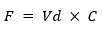
Where:
F = Pollutant flux
Vd = Deposition velocity (m s-1), estimated by the model based on meteorological conditions and vegetation surface characteristics
C = Pollutant concentration (g m-3), obtained from air quality records from the nearest station
The associated monetary value is estimated based on average externality values in the United States for each ton of pollutant removed (Arroyave-Maya et al., 2019), but using a version adjusted for Mexico. Variables related to carbon storage and sequestration, atmospheric pollutant removal, volatile organic compound emissions, and hydrological processes were analyzed using i-Tree Eco. These variables were estimated via integrated models that use tree dendrometric data (diameter, height, and species)—combined with meteorological and air quality data—to quantify carbon fluxes, pollutant deposition, biogenic emissions, and water exchange processes within the urban system (Nowak et al., 2014).
Carbon storage was estimated based on tree above-ground biomass, calculated using allometric equations derived from dendrometric variables such as normal diameter (ND) (model 283DForestry Supplier Inc.® diametric tape), height (model EC II-DHaglöf Sweden® digital clinometer), and species. Subsequently, biomass was converted to carbon content using conversion factors integrated into the i-Tree Eco model. A 2022 tree inventory of Tapachula, comprising 2 477 individuals (Almeida-Cerino et al., 2024), was used for these analyses; this inventory includes dendrometric and taxonomic information for each tree, such as species, normal diameter (ND), total height, and tree condition. These variables served as input data for i-Tree Eco to estimate ecosystem services.
Due to the lack of comprehensive local data on air pollution and rainfall patterns, data from the nearest weather station—located in the city of Tuxtla Gutiérrez, Chiapas—were used in accordance with the operational criteria of the i-Tree Eco model (USFS, 2018). Air pollutant removal and its economic valuation were estimated using i-Tree Eco, which calculates deposition fluxes based on ambient concentrations. Estimates were expressed in t km-2 yr-1 and extrapolated to the study area. The economic valuation of ecosystem services was based on unit costs per ton of removed pollutant and stored or sequestered carbon, as incorporated into the version of i-Tree Eco adapted for Mexico. These values represent estimates of economic externalities associated with air quality and carbon; they are adjusted for national conditions and used by the model to quantify benefits in monetary terms, covering carbon monoxide (CO), nitrogen dioxide (NO2), ozone (O3), sulfur dioxide (SO2), particulate matter smaller than 2.5 µm (PM2.5), and particulate matter smaller than 10 µm (PM10), in accordance with the model's Mexican adaptation (USFS, 2018). Values were expressed in Mexican pesos (MXN), and standard errors were derived from the program's sampling procedure.
Results
Urban land cover
Based on the classification of 2 003 random points using i-Tree Canopy, the analyzed urban area was estimated to cover approximately 66.23 km2. The dominant land cover class was trees and shrubs, accounting for 31.36 % of the total area, followed by grasslands (26.96 %) and areas occupied by houses and buildings (23.31 %). Paved roads and paths represented 10.88 %, while water bodies and bare soil covered proportions of less than 1 % and 7 %, respectively (Table 1).
Table 1. Land cover classes in the city of Tapachula, Chiapas, Mexico, estimated using i-Tree Canopy.
Cover class |
Points (n) |
Coverage (%) |
Standard error |
Area (ha) |
Standard error |
Trees/shrubs |
628 |
31.36 |
1.46 |
1 957 |
48 |
Water bodies |
13 |
0.65 |
0.25 |
49 |
0.9 |
Paved roads and paths |
218 |
10.88 |
0.98 |
764 |
34 |
Houses and buildings |
467 |
23.31 |
1.33 |
1 658 |
45 |
Grasslands |
540 |
26.96 |
1.41 |
1 780 |
47 |
Bare soil |
137 |
6.84 |
0.79 |
415 |
26 |
Total |
2 003 |
100.00 |
|
6 623 |
|
Source: Prepared by the authors based on i-Tree Canopy (Nowak & Greenfield, 2012) and the classification of sampling points for the year 2022.
Ecosystem services of urban trees
Carbon
Total carbon storage in Tapachula’s urban trees was estimated at 150.35 kt, while annual sequestration was 5.98 kt; this is equivalent to 551.27 kt of stored CO2 and 21.95 kt of CO2 sequestered annually (Table 2). The economic value associated with the stored carbon amounts to MXN $526 961 779, estimated based on the unit costs per ton of carbon used in the model.
Table 2. Carbon storage and sequestration by urban trees in Tapachula, Chiapas Mexico.
Type of estimation |
Carbon (kt) |
SE |
CO₂ eq (kt) |
SE |
Value in Mexican pesos (MXN) |
SE |
Annual carbon sequestration |
5.98 |
0.29 |
21.95 |
1.07 |
$20 982 997 |
$1 018 622 |
Total carbon storage |
150.35 |
7.30 |
551.27 |
26.76 |
$526 961 779 |
$25 581 421 |
SE = Standard error; CO2 eq = Carbon dioxide equivalent; MXN = Monetary value expressed in Mexican pesos; estimates generated using i-Tree Eco (USFS, 2018). CO2 eq was calculated using a conversion factor of 3.67. Source: authors' own elaboration based on i-Tree Eco (USFS, 2018) and 2022 urban tree inventory data.
In comparative terms, the values obtained are higher than those for the city of Mérida, with approximately 7.55 Mg ha-1 of carbon (de la Concha et al., 2017), and for Texcoco, with values between 2.56 and 7.55 Mg ha-1 (Martínez-Trinidad et al., 2021). However, they are lower than those documented for areas with established tree cover, such as Bosque de Chapultepec, with 61.68 Mg ha-1 (López-López et al., 2018), and urban parks in Texcoco, with 28.86 Mg ha-1 (Martínez-Trinidad et al., 2021).
Removal of atmospheric pollutants
Tapachula’s urban tree cover removes an estimated total of 173.04 ton of atmospheric pollutants annually, with an approximate economic value of MXN $9 353 802 (Table 3). The pollutants with the highest economic value associated with their removal were particles smaller than 10 µm (PM10) and smaller than 2.5 µm (PM2.5), followed by ozone.
Table 3. Annual removal of air pollutants by the tree population of Tapachula, Chiapas, Mexico.
Pollutants |
Amount (t year-1) |
SE |
Value in Mexican pesos (MXN) |
SE |
Carbon monoxide (CO) |
2.09 |
0.10 |
$61 212 |
$2 972 |
Nitrogen dioxide (NO2) |
8.27 |
0.40 |
$26 733 |
$1 297 |
Ozone (O3) |
99.67 |
4.84 |
$1 194 691 |
$57 996 |
Sulfur dioxide (SO2) |
17.84 |
0.86 |
$3 988 |
$194 |
Particulate matter PM2.5 |
5.20 |
0.25 |
$2 515 094 |
$122 095 |
Particulate matter PM10 |
39.97 |
1.94 |
$5 552 084 |
$269 526 |
Total |
173.04 |
8.40 |
$9 353 802 |
$454 080 |
SE = Standard error; MXN = Monetary value expressed in Mexican pesos; estimates generated using i-Tree Eco (USFS, 2018). Source: authors' own elaboration based on i-Tree Eco (USFS, 2018) and data from the 2022 urban tree inventory.
Hydrological services
Urban trees and shrubs contribute significantly to reducing surface runoff, with an estimated annual avoided volume of 64.77 ML, representing an approximate economic benefit of MXN $2 850 666.
Additionally, significant volumes of interception, evaporation, and transpiration were estimated, reflecting the role of urban trees in regulating the local hydrological cycle (Table 4). The standard errors associated with each variable are presented as a measure of the variability of the estimates derived from sampling.
Table 4. Main hydrological benefits of trees in the city of Tapachula, Chiapas, Mexico.
Benefit |
Amount (ML) |
Standard error |
Avoid runoff |
64.77 |
3.14 |
Evaporation |
1 141.21 |
55.40 |
Interception |
1 148.83 |
55.77 |
Transpiration |
1 351.66 |
65.61 |
Source: prepared by the authors based on i-Tree Eco (USFS, 2018) and 2022 urban tree inventory data.
Other services: oxygen and volatile organic compounds
The urban trees analyzed produce an estimated total of 84 335.6 kg of oxygen per year. The highest contributions to volatile organic compound (VOC) emissions came from species of the Ficus genus and Elaeis guineensis, with 186.24 and 142.38 kg yr-1, respectively, followed by Ficus benjamina (63.32 kg yr-1) and Terminalia catappa (42.59 kg yr-1). In contrast, Tabebuia rosea showed no detectable emissions of monoterpenes or isoprene in the model; this may be attributed to physiological characteristics specific to the species—such as low VOC emission rates—or to the emission factors assigned in the i-Tree Eco model database. Overall, the estimated total emissions for the six most frequent species amount to 460.15 kg yr-1; the largest proportion consists of isoprene (376.95 kg yr-1), while monoterpenes account for a smaller fraction (83.17 kg yr-1).
Contribution of dominant species
Total carbon storage by the urban tree population in the city of Tapachula was estimated at 874.5 tonnes, equivalent to 3 206.9 ton of CO2. It should be noted that the figure of 874.5 ton represents the estimated storage for the inventory's most representative species, whereas the value of 150.35 kt represents the total estimate for the city's urban trees.
Carbon storage was heavily concentrated among a small number of dominant species. Elaeis guineensis accounted for the largest share of stored carbon, representing approximately 35 % of the total. It was followed by Ficus microcarpa, which contributed 11.2 %. Other species making significant contributions included Ficus benjamina (6.5 %), Roseodendron donnell-smithii (6.1 %), Terminalia catappa (5.8 %), and Tabebuia rosea (5.1 %). Together, these six species account for 69 % of the carbon stored in the city's urban trees; Elaeis guineensis and Ficus microcarpa stand out, collectively providing more than 46 % of the stored carbon—a result linked to their high abundance within the city (Almeida-Cerino et al., 2024).
Discussion
Tree cover and urban landscape structure
The estimated tree cover for the city of Tapachula (around 31 %) falls within the range reported for other Mexican and Latin American cities evaluated using similar methodologies, confirming the importance of urban trees as a structural component of the urban landscape. Studies of urban parks in Texcoco describe comparable cover and structural characteristics, albeit with a higher concentration of biomass in established green areas (Martínez-Trinidad et al., 2021). However, given that Tapachula is situated in a tropical low-forest environment, an ecosystem that is naturally more productive and capable of supporting more vegetation, the current tree cover can be considered relatively limited, suggesting opportunities to increase urban tree planting. The similar proportions of built-up areas, grasslands, and tree cover reflect a pattern typical of expanding intertropical cities, where urban vegetation still plays a significant role in environmental regulation (Berglihn & Gómez-Baggethun, 2021).
Furthermore, Tapachula’s location in a region characterized by highly dynamic hydroclimatic and geological conditions (García-Palomo et al., 2006; Murcia & Macías, 2009) makes the presence of urban vegetation particularly important as a buffer against surface runoff and flooding. Although urban tree cover is significant, it could be considered limited for a tropical low-forest ecosystem; therefore, increasing it would contribute to water regulation and resilience in the face of the region's climatic and geological variability.
Carbon storage and sequestration: magnitude and regional comparison
Tapachula’s urban tree population possesses a carbon storage capacity that, while lower than that documented in mature green areas such as Bosque de Chapultepec (López-López et al., 2018), is comparable to or greater than that reported for other Mexican cities evaluated using i-Tree Eco, such as Texcoco (Martínez-Trinidad et al., 2021) and Mérida (de la Concha et al., 2017). These differences can be attributed to tree diameter structure, species composition, and the degree of urban forest maturity—factors that directly influence biomass and carbon accumulation (Nowak et al., 2014). Furthermore, local environmental conditions and tree management practices can alter growth rates and carbon sequestration efficiency, contributing to the variability observed across cities (García-Sánchez et al., 2019).
The dominance of introduced, fast-growing species—such as Ficus microcarpa and Elaeis guineensis—largely explains the significant contribution of a small number of species to total carbon storage; this pattern has also been observed in other urban inventories, where a few species account for most of the biomass (Martínez-Trinidad et al., 2021).
Removal of atmospheric pollutants and air quality
The results confirm that Tapachula’s urban forest contributes significantly to the removal of atmospheric pollutants—particularly ozone and particulate matter—aligning with findings from studies conducted in other cities using i-Tree Eco (Arroyave-Maya et al., 2019; Nowak et al., 2006; Riondato et al., 2020). The magnitude of the estimated removal falls within the expected ranges for cities with tree cover of approximately 30 %.
This ecosystem service is particularly significant given that air pollution is a major environmental issue in urban areas and its effects on human health are well documented (Mateos et al., 2018). In this regard, urban trees serve not merely an aesthetic or landscape function but constitute green infrastructure that directly impacts urban environmental quality.
Hydrological services and risk context in Tapachula
The reduction in surface runoff estimated using i-Tree Eco is particularly significant in a city like Tapachula, where severe flooding associated with extreme hydrometeorological events has historically been documented (Murcia & Macías, 2009). Although these estimates must be interpreted with caution due to model limitations—such as the use of weather data from a station outside the study area, the application of generalized estimation factors for species, and the simplification of hydrological processes—the results confirm the role of urban trees as a key component in local-scale hydrological regulation.
These findings align with the concept that urban vegetation acts as a buffer against extreme events, particularly in tropical regions with high annual precipitation (Cimburova & Barton, 2020; Nowak et al., 2014).
Volatile organic compound emissions: a service with externalities
Estimates of volatile organic compound (VOC) emissions indicate that certain dominant species, particularly Ficus spp. and Elaeis guineensis, contribute significantly to this biogenic flux. This finding aligns with results from the i-Tree Eco model itself, as well as studies showing that specific tropical species can emit substantial quantities of isoprene and monoterpenes (Nowak et al., 2006; Riondato et al., 2020).
This highlights the importance of considering not only the benefits of urban trees but also their potential environmental externalities when planning species composition for urban forestry programs (Nowak et al., 2014; Riondato et al., 2020).
Implications for urban tree management
Overall, the results confirm that Tapachula’s urban trees constitute a strategic environmental asset, providing quantifiable benefits regarding carbon sequestration, air quality, and hydrological regulation—findings consistent with similar assessments conducted in Mexico and other countries (Cimburova & Barton, 2020; Martínez-Trinidad et al., 2021). However, the findings also underscore the need to guide species selection based on criteria regarding functionality, resilience, and the maximization of ecosystem benefits.
Conclusions
The urban forest in Tapachula covers nearly one-third of the city's land area and provides quantifiable ecosystem services—specifically carbon storage and sequestration, atmospheric pollutant removal, and hydrological regulation—the values of which can be expressed in both biophysical and economic terms using the i-Tree Eco tool. The provision of these services is heavily concentrated in a small number of dominant species (mostly introduced ones), revealing the system's high functional dependency and highlighting the need to incorporate diversification and functional species selection criteria into urban forestry planning. In a climate context characterized by heavy rainfall, the hydrological services provided by these trees take on strategic importance by helping to reduce surface runoff. Furthermore, estimates of volatile organic compound emissions indicate that the specific composition of the tree population must be explicitly considered in urban air quality management. Finally, the results confirm that i-Tree Eco is a suitable and replicable tool for the comprehensive assessment of urban trees in Mexican cities, with the potential to support urban planning and environmental management based on quantitative evidence.
Acknowledgments
The authors thank the individuals who participated in the field activities as interns.
Conflict of interest
The authors declare that there is no conflict of interest.
Contribution by author
Vincenzo Bertolini, Tomás Martínez-Trinidad and Carlos Mario Almeida-Cerino: development of the original idea and initial drafting of the manuscript; Vincenzo Bertolini, Tomás Martínez-Trinidad, Oscar Jáurequi Ortiz and Raúl de Jesús Jáuregui Rodríguez: final review of the text, making corrections, supplementing information, and adapting the manuscript to editorial guidelines. All authors approved the final version.
References
Almeida-Cerino, C. M., Bertolini, V., & Martínez-Trinidad, T. (2024). Estructura y diversidad florística en áreas verdes urbanas de la ciudad de Tapachula, Chiapas, México. Revista Mexicana de Ciencias Forestales, 15(83),131-154. https://doi.org/10.29298/rmcf.v15i83.1457
Arroyave-Maya, M. del P., Posada-Posada, M. I., Nowak, D. J., & Hoehn, R. E. (2019). Remoción de contaminantes atmosféricos por el bosque urbano en el valle de Aburrá. Colombia Forestal, 22(1), 5-16. http://dx.doi.org/10.14483/2256201X.13695
Beckmann-Wübbelt, A., Fricke, A., Sebesvari, Z., Yakouchenkova, I. A., Fröhlich, K., & Saha, S. (2021). High public appreciation for the cultural ecosystem services of urban and peri‑urban forests during the COVID-19 pandemic. Sustainable Cities and Society, 74,Article 103240.https://doi.org/10.1016/j.scs.2021.103240
Berglihn, E. C., & Gómez-Baggethun, E. (2021). Ecosystem services from urban forests: The case of Oslomarka, Norway. Ecosystem Services, 51, Article 101358.https://doi.org/10.1016/j.ecoser.2021.101358
Cimburova, Z., & Barton, D. N. (2020). The potential of geospatial analysis and Bayesian networks to enable i-Tree Eco assessment of existing tree inventories. Urban Forestry & Urban Greening, 55, Article 126801. https://doi.org/10.1016/j.ufug.2020.126801
de la Concha, H., Roche-Cano, L., & García-Burgos, A. (2017). Inventario del arbolado urbano de la Ciudad de Mérida [Libro blanco]. Ayuntamiento de Mérida 2018-2021. http://www.merida.gob.mx/sustentable/contenidos/doc/inventario_arbolado_merida.pdf
García-Palomo, A., Macías, J. L., Arce, J. L., Mora, J. C., Hughes, S., Saucedo, R., Espíndola, J. M., Escobar, R., & Layer, P. (2006). Geological evolution of the Tacaná Volcanic Complex, México-Guatemala. In W. I. Rose, G. J. S. Bluth, M. J. Carr, J. W. Ewert, L. C. Patino & J. W. Vallance (Eds.), Volcanic hazards in Central America (pp. 39-57).Geological Society of America. https://www.researchgate.net/publication/281256054_Geological_evolution_of_the_Tacana_Volcanic_Complex_Mexico-Guatemala?__cf_chl_tk=sewQi9dBxi1BBX9YyR6yvXFz3SCf8VgUJ04qvrRNg40-1790369624-1.0.1.1-m912RuOTUPIWAm2bGS0tsjBuWZo11VcSgU.Y3uwLdhs
García-Sánchez, I. E., Barradas, V. L., Ponce de León-Hill, C. A., Esperón-Rodríguez, M., Rosas-Pérez, I., & Ballinas, M. (2019). Effect of heavy metals and environmental variables on the assimilation of CO2 and stomatal conductance of Ligustrum lucidum, an urban tree from Mexico City. Urban Forestry & Urban Greening, 42, 72-81.https://doi.org/10.1016/j.ufug.2019.05.002
Instituto Nacional de Estadística y Geografía. (2021). 2020 Censo de población y vivienda [Base de datos]. Instituto Nacional de Estadística y Geografía. https://censo2020.mx/
López-López, S. F., Martínez-Trinidad, T., Benavides-Meza, H. M., García-Nieto, M., & Ángeles-Pérez, G. (2018). Reservorios de biomasa y carbono en el arbolado de la primera sección del Bosque de Chapultepec, Ciudad de México. Madera y Bosques, 24(3),Artículo e2431620.https://doi.org/10.21829/myb.2018.2431620
Machado, Jr., C., Mantovani-Ribeiro, D. M. N., & Noronha-Viana, A. B. (2021). Public health in times of crisis: An overlooked variable in city management theories? Sustainable Cities and Society, 66, Article 102671. https://doi.org/10.1016/j.scs.2020.102671
Martínez-Camilo, R., Martínez-Meléndez, N., Martínez-Meléndez, M., Pérez-Ferrera, M. Á., & Jiménez-López, D. A. (2019). Why continue with floristic checklists in Mexico? The case of the Tacaná-Boquerón Priority Terrestrial Region, in the Mexican State of Chiapas. Botanical Sciences, 97(4), 741-753. https://doi.org/10.17129/botsci.2174
Martínez-Trinidad, T., Hernández-López, P., López-López, S. F., & Mohedano-Caballero, L. (2021). Diversity, structure and ecosystem services of trees in four parks in Texcoco using i-Tree Eco. Revista Mexicana de Ciencias Forestales, 12(67),203-223.https://doi.org/10.29298/rmcf.v12i67.880
Mateos, A. C., Amarillo, A. C., Carreras, H. A., & Gonzalez, C. M. (2018). Land use and air quality in urban environments: Human health risk assessment due to inhalation of airborne particles. Environmental Research, 161, 370-380.https://doi.org/10.1016/j.envres.2017.11.035
Murcia, H. F., & Macías, J. L. (2009). Registro geológico de inundaciones recurrentes e inundación del 4 de octubre de 2005 en la ciudad de Tapachula, Chiapas, México. Revista Mexicana de Ciencias Geológicas, 26(1),1-17. http://www.scielo.org.mx/scielo.php?pid=S1026-87742009000100002&script=sci_arttext
Nowak, D. J., & Greenfield, E. J. (2012). Tree and impervious cover change in U. S. cities. Urban Forestry & Urban Greening, 11(1), 21-30. https://doi.org/10.1016/j.ufug.2011.11.005
Nowak, D. J., Crane, D. E., & Stevens, J. C. (2006). Air pollution removal by urban trees and shrubs in the United States. Urban Forestry & Urban Greening, 4(3-4), 115-123. https://doi.org/10.1016/j.ufug.2006.01.007
Nowak, D. J., Hirabayashi, S., Bodine, A., & Greenfield, E. (2014). Tree and forest effects on air quality and human health in the United States. Environmental Pollution, 193, 119-129. https://doi.org/10.1016/j.envpol.2014.05.028
Riondato, E., Pilla, F., Basu, A. S., & Basu, B. (2020). Investigating the effect of trees on urban quality in Dublin by combining air monitoring with i-Tree Eco model. Sustainable Cities and Society, 61, Article 102356. https://doi.org/10.1016/j.scs.2020.102356
United State Forest Service. (2018). Adaptación del programa I-Tree Eco a México. United State Forest Service, Davey Tree Expert Company. https://www.itreetools.org/documents/212/iTree_Eco_Mexico_Adaptation_Description_15Sep2018.pdf
Todos los textos publicados por la Revista Mexicana de Ciencias Forestales –sin excepción– se distribuyen amparados bajo la licencia Creative Commons 4.0 Atribución-No Comercial (CC BY-NC 4.0 Internacional), que permite a terceros utilizar lo publicado siempre que mencionen la autoría del trabajo y a la primera publicación en esta revista.