Revista Mexicana de Ciencias Forestales Vol. 17 (98)
Dasonomía Urbana (2026)
DOI: https://doi.org/10.29298/rmcf.v17i98.1641 Research article
Dendrometric assessment, diversity, and overall condition of the urban tree population in Tingo María, Huánuco, Peru Evaluación dasométrica, diversidad y condición integral del arbolado urbano en Tingo María, Huánuco, Perú
Jairo Edson Gutiérrez-Collao1*, Edwins Bens Sanchez Ramos2, Julio Miguel Ángeles-Suazo1, Camila Valentina Carrasco-Llaique3, Frank Alex Chahuaylacc De La Cruz1, Nataly Lujan Huamani1 |
Fecha de recepción/Reception date: 12 de febrero de 2026.
Fecha de aceptación/Acceptance date: 17 de junio de 2026.
_______________________________
1Escuela Profesional de Ingeniería Forestal y Ambiental, Universidad Nacional Autónoma de Tayacaja Daniel Hernández Morillo. Perú.
2Escuela Profesional de Ingeniería Forestal, Universidad Nacional Agraria de la Selva. Perú.
3Escuela Profesional de Ingeniería Ambiental y Sanitaria, Universidad Nacional de Huancavelica. Perú.
*Autor para correspondencia; correo-e: jairo.gutierrez@unat.edu.pe
*Corresponding author; e-mail: jairo.gutierrez@unat.edu.pe
Abstract
Urban trees are key to the environment and quality of life in cities. Thus, this study aimed to assess the urban tree population along five major avenues in the city of Tingo María, in the Huánuco region of Peru, in order to identify dasometric and phytosanitary variables, as well as biodiversity and associated risks. A tree census was conducted on each avenue, and the following information was recorded for each individual tree: normal diameter (Nd), total height (Th), and crown area (CA). In addition, the Shannon (H') and Margalef (DMg) diversity indices were calculated, and the structural, physical, and health status of the trees was assessed, along with the potential risks associated with urban trees. A total of 759 individuals were recorded, representing 50 species and 26 families, with a predominance of Arecaceae and Fabaceae, as well as a significant presence of exotic species such as Terminalia catappa. The dasometric variables exhibited high structural variability (Nd=26.12 cm; Th=6.29 m; CA=39.50 m2). Alameda Perú Avenue showed greater diversity (H'=2.11; DMg=4.72). In conclusion, the urban tree population in Tingo María is in good physical and health condition and causes minimal interference with the city’s infrastructure; however, priority should be given to the use of native species.
Keywords: Urban green spaces, physical condition, phytosanitary assessment, urban management, diversity indices, dasometric variables.
Resumen
El arbolado urbano es clave para el ambiente y la calidad de vida en las ciudades. En ese sentido, esta investigación tuvo como objetivo evaluar el arbolado urbano en cinco avenidas principales de la ciudad de Tingo María, en la región Huánuco, Perú; con el propósito de conocer las variables dasométricas, fitosanitarias, diversidad y riesgos asociados. Se realizó un censo del arbolado en cada avenida, y por individuo se registró la siguiente información: el diámetro normal (Dn), la altura total (Ht) y área de copa (AC). Asimismo, se calcularon los índices de diversidad de Shannon (H′) y Margalef (DMg), y se evaluó su estado estructural, físico y sanitario, junto con los riesgos potenciales asociados al arbolado urbano. Se contabilizaron 759 individuos, distribuidos en 50 especies y 26 familias, con predominio de Arecaceae y Fabaceae, además de una marcada presencia de especies exóticas como Terminalia catappa. Las variables dasométricas evidenciaron alta variabilidad estructural (Dn=26.12 cm; Ht=6.29 m; AC=39.50 m2). La avenida Alameda Perú presentó mayor diversidad (H′=2.11; DMg=4.72). En conclusión, el arbolado urbano de Tingo María presenta buen estado físico y sanitario y baja interferencia con la infraestructura; sin embargo, se debe priorizar el uso de especies nativas.
Palabras clave: Áreas verdes urbanas, estado físico, evaluación fitosanitaria, gestión urbana, índices de diversidad, variables dasométricas.
Introduction
Effective management of urban trees for the well-being of the population requires a better understanding of their structure and functioning so as to base decisions on scientific evidence (Lucchezi-Miyahara et al., 2022). In urban areas, where tree species are the main component of the landscape (Jiménez-Pérez et al., 2022; Semeraro et al., 2021), their selection, use, and management take on special importance and are determined by the citizens, real estate developers, and authorities (Andrade et al., 2021). However, while urban trees provide numerous benefits, they are exposed to various (climatic, environmental, and biotic) stress factors which increase their vulnerability to structural defects and failures that can pose a risk to people and infrastructure if not properly managed and assessed (Esperon-Rodriguez et al., 2025).
Urban trees are a key component of the landscape and environmental well-being in cities, as they mitigate the impacts of urbanization and improve quality of life (Angeles-Vasquez et al., 2025; Martínez-Juárez et al., 2022). In addition, they provide regulatory, cultural, and provisioning ecosystem services. They also help improve air and water quality, reduce heat, sequester carbon, and control pests through biological regulation by promoting the presence of natural enemies (birds and arthropods) and increasing plant diversity, which reduces the incidence of specific pests (Madayani & Lola, 2025; Sharma et al., 2024; Vashist et al., 2025).
Therefore, assessment of the structural characteristics and risk status of urban trees is essential to guide their efficient management, contribute to sustainable urban planning, and prevent risks to public safety by providing useful information for decision-making regarding the management of green spaces (Hernández-López et al., 2024).
The main challenge is implementing management practices that will maintain acceptable risk levels (Tomao et al., 2015), since urban trees can negatively affect infrastructure depending on their location, stage of development, and maintenance (Lyytimäki, 2017). In addition, damage to infrastructure such as roadways, sidewalks, and planters results from interactions among biological, social, and environmental factors, requiring comprehensive management based on technical criteria (Esquivel & Quijas, 2021). Within this context, this study evaluated the urban tree population in Tingo María, Huánuco, Peru. To this end, data on tree-related variables, plant health, biodiversity, and associated risks were integrated in response to the need to conduct a comprehensive analysis of the trees’ structural condition, health status, and interaction with the urban environment.
Materials and Methods
Study area
The study was conducted on five main avenues in the urban area of Tingo María, located in the province of Leoncio Prado, in the Huánuco region of Peru. The city is situated at an altitude of 660 m and is classified as a very humid subtropical forest—warm, humid, and rainy (Holdridge, 1978), with an average annual temperature between 24 and 25 °C, an average annual rainfall of 3 400 mm, and an average relative humidity of 77.5 % (Servicio Nacional de Meteorología e Hidrología del Perú [Senamhi], 2022).
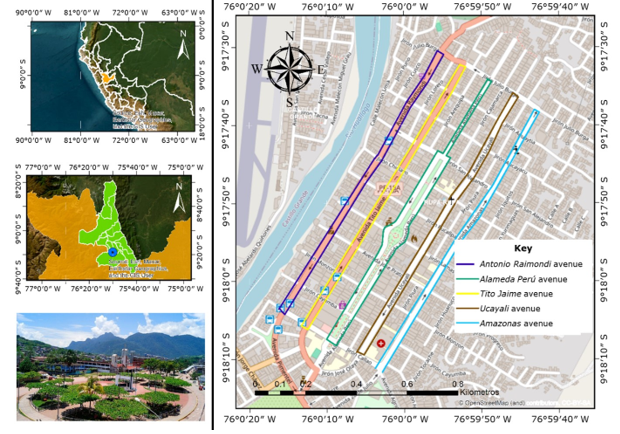
A registration system based on the zoning of Tingo María's main avenues was implemented, in accordance with the city map. The study covered ten blocks along the Amazonas, Ucayali, Alameda Perú, Tito Jaime, and Antonio Raimondi avenues (Figure 1), which were selected for their high density of vehicular and pedestrian traffic.
kilómetros = Kilometers
Figure 1. Study area.
Identification of urban tree species
Systematic surveys were conducted to collect data and identify species of interest in urban forestry; when necessary, representative samples were collected for subsequent analysis and identification at the Herbarium of the National Agrarian University of the Jungle (Universidad Nacional Agraria de la Selva). The species were identified by their common and scientific names (Martínez-Trinidad et al., 2021; Sikuzani et al., 2019), and the nomenclature was verified on World Flora Online (WFO, 2025).
Assessment of dasometric variables in urban trees
All woody plants, palms, and trees were surveyed and measured, excluding seedlings and saplings (Esquivel & Quijas, 2021). The normal diameter (Nd) was measured using a model 283D 5-meter Forestry Suppliers® diameter tape. The total height (Th) was measured using a model PM-5/360PC Suunto® clinometer, from ground level to the tip. The tree cover was calculated according to the guidelines of the Ministry of the Environment (Ministerio de Desarrollo Agrario y Riego [Midagri], 2022); the radius was measured using a Major® 30-meter measuring tape with a handle, and the area was estimated using Equation 1 suggested by Midagri (2022):
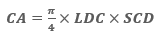 (1)
Where:
CA = Crown area of the trees (m2)
LDC = Largest diameter of tree crowns (m)
SDC = Smallest diameter of tree crowns (m)
Species diversity in ruban trees
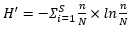
Table 1 shows the equations for calculating species diversity using the Shannon Diversity index and the Margalef index (Cultid-Medina & Escobar, 2019; Jost, 2006).
Table 1. Equations used to calculate indexes and diversity
Equations |
Where |
|
H′= Shannon index S = Number of species present N = Total number of individuals ln = Natural logarithm n = Number of individuals of species i |
|
DMg = Margalef index N = Total number of individuals S = Number of species present ln = Natural logarithm |
Risks associated with urban trees
Risk factors in urban tree populations take into account the interactions and conflicts between trees and built infrastructure, such as interference with sidewalks, damage to gray infrastructure, and risks associated with visual and mobility barriers, all of which can be mitigated through approaches appropriately integrating green and gray infrastructure into the urban environment (Otero-Durán & Torres, 2024).
The risks were assessed using a semi-quantitative approach that took into account indicators of tree-infrastructure interaction, such as damage to pavement, disruption to drainage (gutters), obstruction of pedestrian traffic, and visual interference. Each indicator was rated on a four-level ordinal scale (0=No damage, 1=Mild, 2=Moderate, 3=Severe), according to previously defined criteria for the extent of the damage.
Data analysis
The data were analyzed using descriptive statistics. In addition, correlation analyses were performed to explore the relationship between the dasometric variables and the damage levels; the InfoStat software version 2020 (Di Rienzo et al., 2020) was used for this purpose.
Results
The census recorded 759 individuals representing 50 species and 26 families, with a predominance of Arecaceae and Fabaceae (Table 2). Exotic taxa were dominant: Terminalia catappa L. (385 individuals), Ficus benjamina L. (82 individuals), and Elaeis guineensis Jacq. (61 individuals) which had the highest values for diameter, height, and crown area. The native taxa, which included Calycophyllum spruceanum (Benth.) Hook. f. ex K. Schum., Cassia grandis L. f., Mauritia flexuosa L. f., and Inga edulis Mart., stood out for their larger size and coverage, which proved their structural and functional value; Swietenia macrophylla King, a taxon of high ecological value, was also recorded.
Table 2. Urban tree species and average dasometric variables recorded for trees along five avenues in the city of Tingo María, Huanúco, Perú.
Family |
Scientific name |
Number of individuals |
Origin |
Nd (cm) |
Th (m) |
CA (m2) |
Combretaceae |
Terminalia catappa L. |
385 |
Exotic |
24.02 |
5.39 |
43.78 |
Moraceae |
Ficus benjamina L. |
82 |
Exotic |
15.17 |
2.96 |
9.07 |
Arecaceae |
Elaeis guineensis Jacq. |
61 |
Exotic |
64.04 |
14.72 |
88.20 |
Myrtaceae |
Syzygium malaccense (L.) Merr. & L. M. Perry |
39 |
Exotic |
34.22 |
8.02 |
44.12 |
Arecaceae |
Chrysalidocarpus lutescens H. Wendl. |
36 |
Exotic |
9.24 |
4.56 |
8.34 |
Arecaceae |
Cocos nucifera L. |
22 |
Exotic |
24.64 |
9.99 |
26.74 |
Anacardiaceae |
Mangifera indica L. |
14 |
Exotic |
41.62 |
8.82 |
54.96 |
Annonaceae |
Annona muricata L. |
13 |
Native |
13.84 |
5.70 |
11.31 |
Oxalidaceae |
Averrhoa carambola L. |
13 |
Exotic |
18.42 |
4.66 |
18.84 |
Arecaceae |
Phoenix roebelenii O′Brien |
8 |
Exotic |
10.56 |
2.20 |
6.02 |
Lauraceae |
Persea americana Mill. |
6 |
Native |
15.20 |
6.08 |
29.39 |
Arecaceae |
Mauritia flexuosa L. f. |
6 |
Native |
51.73 |
13.13 |
51.03 |
Rubiaceae |
Calycophyllum spruceanum (Benth.) Hook. f. ex K. Schum. |
5 |
Native |
39.72 |
17.40 |
86.58 |
Fabaceae |
Cassia grandis L. f. |
4 |
Native |
48.46 |
10.63 |
111.79 |
Caricaceae |
Carica papaya L. |
4 |
Native |
10.11 |
2.93 |
1.04 |
Cupressaceae |
Cupressus macrocarpa (Hartw.) Bartel |
3 |
Exotic |
7.96 |
4.05 |
5.23 |
Solanaceae |
Brunfelsia grandiflora D. Don |
3 |
Native |
14.32 |
2.50 |
6.99 |
Fabaceae |
Inga edulis Mart. |
5 |
Native |
12.86 |
5.14 |
28.73 |
Fabaceae |
Delonix regia (Bojer ex Hook.) Raf. |
3 |
Exotica |
23.83 |
6.87 |
41.50 |
Rubiaceae |
Morinda citrifolia L. |
3 |
Native |
15.23 |
4.57 |
13.58 |
Rubiaceae |
Ixora coccinea L. (sinonimia de Embothrium coccineum J. R. Forst. & G. Forst.) |
3 |
Exotic |
6.93 |
1.64 |
0.94 |
Sapotaceae |
Pouteria caimito Radlk. |
3 |
Native |
20.90 |
6.97 |
25.97 |
Malvaceae |
Matisia cordata Bonpl. |
3 |
Native |
24.30 |
6.07 |
45.05 |
Arecaceae |
Adonidia merrillii (Becc.) Becc. |
2 |
Exotic |
21.17 |
4.65 |
9.86 |
Piperaceae |
Piper aduncum L. |
2 |
Native |
7.48 |
3.15 |
7.91 |
Cupressaceae |
Cupressus lusitanica Mill. (sinonimia de Hesperocyparis lusitanica (Mill.) Bartel) |
2 |
Exotic |
11.46 |
3.83 |
6.09 |
Meliaceae |
Swietenia macrophylla King |
2 |
Native |
24.70 |
5.80 |
10.40 |
Bignoniaceae |
Handroanthus capitatus (Bureau & K. Schum.) |
2 |
Exotic |
14.96 |
4.50 |
15.09 |
Fabaceae |
Erythrina amazonica Krukoff |
2 |
Native |
10.93 |
6.50 |
25.62 |
Malvaceae |
Hibiscus tiliaceus L. |
2 |
Exotic |
11.62 |
6.00 |
9.33 |
Lythraceae |
Lagerstroemia indica L. |
2 |
Exotic |
8.33 |
4.30 |
11.93 |
Malvaceae |
Hibiscus rosa-sinensis L. |
1 |
Exotic |
12.73 |
3.00 |
3.33 |
Euphorbiaceae |
Codiaeum variegatum (L.) A. Juss |
1 |
Exotic |
8.91 |
1.75 |
1.33 |
Cycadaceae |
Cycas revoluta Thunb. |
1 |
Exotic |
13.85 |
3.00 |
8.17 |
Malvaceae |
Theobroma cacao L. |
1 |
Native |
8.59 |
2.50 |
10.72 |
Rutaceae |
Citrus reticulata Blanco |
1 |
Exotic |
8.75 |
6.00 |
6.28 |
Fabaceae |
Caesalpinia pulcherrima (L.) Sw. |
1 |
Exotic |
12.41 |
6.30 |
26.39 |
Nyctaginaceae |
Bougainvillea spectabilis Willd. |
1 |
Exotic |
14.32 |
3.20 |
5.94 |
Fabaceae |
Tamarindus indica L. |
1 |
Exotic |
37.88 |
12.20 |
41.05 |
Rutaceae |
Citrus tangerina Yu. Tanaka (sinonimia de Citrus×aurantium L.) |
1 |
Exotic |
12.73 |
4.50 |
28.20 |
Myrtaceae |
Eucalyptus globulus Labill. |
1 |
Exotic |
39.79 |
16.00 |
70.92 |
Malvaceae |
Pachira aquatica Aubl. |
1 |
Native |
47.43 |
10.00 |
1.65 |
Moraceae |
Ficus elastica Roxb. ex Hornem. |
1 |
Exotic |
319.90 |
15.00 |
656.72 |
Fabaceae |
Calliandra angustifolia Spruce ex. Benth. |
1 |
Exotic |
15.92 |
3.80 |
34.40 |
Malphigiaceae |
Bunchosia armeniaca DC. |
1 |
Native |
9.87 |
3.50 |
3.77 |
Araucariaceae |
Araucaria columnaris (G. Forst.) Hook. |
1 |
Exotic |
20.69 |
7.50 |
21.17 |
Arecaceae |
Bactris gasipaes Kunth |
1 |
Native |
14.32 |
10.30 |
17.34 |
Meliaceae |
Guarea guidonia (L.) Sleumer |
1 |
Native |
24.51 |
7.50 |
49.64 |
Euphorbiaceae |
Euphorbia trigona Haw. |
1 |
Exotic |
---- |
2.10 |
---- |
Cactaceae |
Cereus hexagonus (L.) Mill. |
1 |
Exotic |
---- |
4.20 |
---- |
Nd = Normal diameter (cm); Th = Total height (m); CA = Crown area of the trees (m2).
The most common crowns were umbrella-shaped (51.1 %), palm-shaped (18.2 %), and spherical (13.7 %); these shapes influenced the characteristics of the shade, microclimate regulation, and urban landscape (Figure 2).
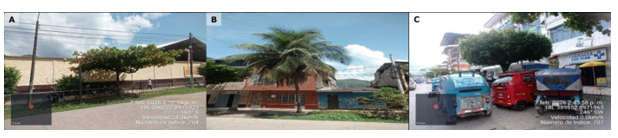
A = Umbrella-shaped cown with a broad shade projection area; B = Vertically structured palm-shaped crown; C = Dense, spherical crown.
Figure 2. Examples of urban tree crwon shapes in Tingo María, Huánuco, Perú
The physical and health assessment revealed that the trees were in good overall condition, with 1.1 % showing signs of bark stripping and 0.5 % dead, primarily due to human activities. No rot was observed; however, epiphytic or opportunistic plants—primarily bromeliads and ferns—were present on 8.6 % of the individuals. In terms of stability, 55.9 % showed no root exposure, while 16.7 % exhibited severe exposure. In addition, 75.1 % had a straight trunk, and 3.8 % had a severe tilt; the latter group requires monitoring (Figure 3).
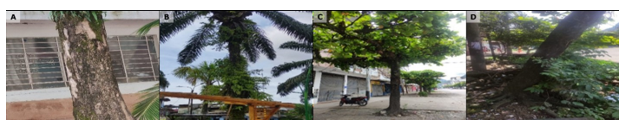
A = Debarking of the log; B = Invasive (opportunistic) species; C = Severe root exposure; D = Steeply leaning tree stem with a structural risk.
Figure 3. Physical and health status of urban trees in Tingo María, Huánuco, Perú.
Descriptive statistics for the dendrometric variables revealed high structural variability in tree dimensions (Table 3), reflecting heterogeneity in the composition, age, and developmental stage of individual trees—a factor that can be viewed as positive from the perspective of structural diversity. However, such variability poses challenges for urban management, as it requires tailored strategies for maintenance, pruning, and renewal aimed at improving the stability, functionality, and provision of ecosystem services by urban trees.
Table 3. Descriptive statistics of dasometric variables registered in the urban tree canopy along five avenues in the city of Tingo María, Huánuco, Peru.
Variable |
Average |
Standar deviation |
Coefficient of variation |
Minimum |
Maximum |
Nd (cm) |
26.12 |
18.80 |
71.96 |
6.37 |
319.90 |
Th (m) |
6.29 |
3.79 |
60.24 |
1.00 |
24.00 |
CA (m2) |
39.50 |
38.94 |
98.57 |
0.57 |
656.72 |
Nd = Normal diameter (cm); Th = Total height(m); CA = Tree crown area (m2).
A joint analysis of the Shannon-Wiener (H') and Margalef (DMg) indexes revealed differences in diversity, species richness, and ecological functionality between the assessed avenues. Figure 4 shows that Alameda Perú avenue stood out across all three indicators, registering the highest values for specific diversity (H′=2.11) and species richness (DMg=4.72), and therefore reflecting a more diverse, structurally complex plant community with high ecological significance.
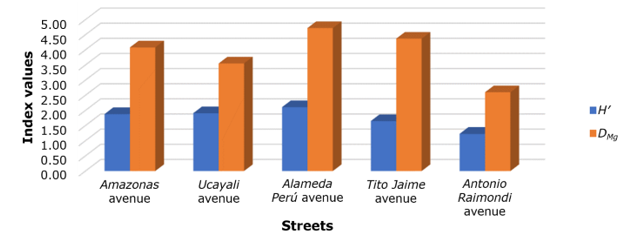
H′ = Shannon-Wiener index; DMg = Margalef index.
Figura 4. Índices de diversidad del arbolado urbano evaluado en cinco avenidas principales en la ciudad de Tingo María, Huánuco, Perú.
Figure 5 shows that the joint analysis reveals a low incidence of interference between trees and urban infrastructure. With regard to damage caused by trees, 9 % caused severe damage to sidewalks or pavement (Figure 6A), while 2.2 % caused damage to gutters (Figure 6B). In addition, 1.8 % obstructed the view of private signs (Figure 6C), and 1.1 % of urban trees obstructed the path (Figure 6D).
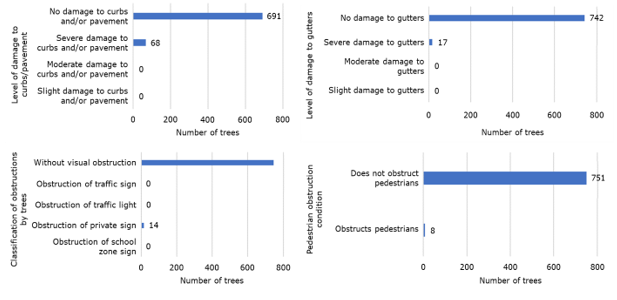
Figure 5. Risks associated with assessed urban trees on five major avenues in the city of Tingo María, Huánuco, Peru..
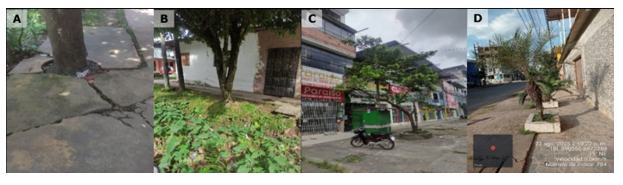
A = Damage to sidewalks; B = Damage to gutters; C = Obstruction of a private sign; D = Obstruction of a crosswalk.
Figure 6. Risks associated with urban trees in Tingo María, Huánuco, Perú.
Spearman's correlation analysis showed that only the crown area was significantly correlated with the level of damage (ρ=0.106; p=0.004), indicating a weak positive correlation. In contrast, diameter, stem height, and total height showed no statistically significant relationships (p>0.05), suggesting that these variables do not significantly influence the assessed damages (Table 4).
Table 4. Spearman's correlation between the level of damage and the dasometric variables of the urban tree population on five avenues in the city of Tingo María, Huánuco, Peru.
Variable |
Coefficients |
Diameter (cm) |
Stem height(m) |
Total height(m) |
Crown area(m2) |
Damage |
Coefficient of correlation |
0.038 |
0.061 |
0.049 |
0.106** |
(Bilateral) sig. |
0.3 |
0.093 |
0.18 |
0.004 |
**indicates statistical significance at p<0.01. The sample size utilized was n=759 individuals.
Discussion
The large number of recorded individuals, the diversity of species, and the predominance of young trees indicate a high potential for providing urban ecosystem services, such as temperature regulation, carbon sequestration and storage, improved air quality, and water infiltration (Baró et al., 2014). However, the marked dominance of certain species and the occasional presence of large individuals call for more rigorous planning and management, aimed at diversifying the plant community and ensuring good growing conditions in order to minimize potential risks to infrastructure.
Furthermore, the areas studied herein exhibit greater floral richness and diversity (50 species and 26 families) compared to previous studies conducted in Pampas, Huancavelica-Peru, where 13 species and 10 families were identified in tree-lined avenues and side streets (Gutiérrez-Collao et al., 2025a), and nine species and eight families, in open spaces (Gutiérrez-Collao et al., 2025b). It is worth noting that, unlike the Antonio Raimondi avenue, the other avenues had high levels of richness and diversity compared to that area, indicating a more complex and functional tree structure.
On the other hand, species identification and the analysis of dasometric variables show that these factors have a limited influence on infrastructure damage. The correlation analysis showed that the crown area has a statistically significant relationship with the level of damage, indicating that greater canopy expansion is associated with a slight increase in damage. In contrast, the normal diameter (Nd), stem height, and total height showed no significant correlations, suggesting that these dimensions are not determining factors within the context under evaluation.
These results differ partly from those reported by Day et al. (2010), Hilbert et al. (2020) and Sjöman et al. (2018), who note that larger trees cause greater urban conflicts because they develop more extensive root systems. However, the weak correlation with crown area suggests the impact may be more closely associated with lateral expansion than with vertical growth or diameter; this may be due to surface roots interacting with infrastructure.
In this regard, damage depends not only on tree size but also on factors such as species and root architecture, soil conditions, and urban design. According to Vogt et al. (2015), tree planning should integrate dasometric variables with ecological and spatial criteria to optimize ecosystem services and reduce conflicts (Esquivel & Quijas, 2021).
Several studies indicate that a shorter distance between the trees and the infrastructure increases the likelihood of damage (Abd-Kadir & Othman, 2012; Alani & Lantini, 2020); however, this variable was not taken into account in the study. Therefore, it is recommended that future research incorporate it, along with differences among species, in order to establish technical criteria.
From a phytosanitary and structural perspective, the results show a low incidence of deterioration, with minor issues such as bark stripping, nails or wires, cavities, and mortality; however, these may pose potential risks without adequate monitoring. In addition, invasive species were observed, primarily epiphytes (bromeliads and ferns) typical of humid tropical environments that use trees as a support without being parasitic. Although they do not cause immediate failures, they can gradually weaken the structure and increase its vulnerability to weather events or urban stress (Esquivel & Quijas, 2021). In this regard, Zevgolis et al. (2022) recommend conducting periodic inspections of individuals with structural defects or signs of deterioration.
Conclusions
The research findings show that the urban tree cover along the five avenues in Tingo María exhibits high floristic diversity and a heterogeneous structure, with a marked concentration of juvenile trees. Dasometric variables influence interaction with urban infrastructure, highlighting the importance of appropriate species selection and planning of planting areas. Although the overall condition of the trees is favorable, technical management of the urban tree population needs strengthening in order to balance diversity, ecological functionality, and risk reduction, and thereby ensure its long-term sustainability.
Acknowledgments
The authors are grateful to Ingrid Polet Chávez Merino, Engineer, for her assistance in recording the research data.
Conflict of interest
The authors declare that they have no conflicts of interest.
Contributions by author
Jairo Edson Gutiérrez-Collao: drafting of the manuscript and statistical analysis; Edwins Bens Sanchez Ramos: drafting of the manuscript; Julio Miguel Ángeles-Suazo: interpretation of the results; Camila Valentina Carrasco-Llaique: data analysis; Frank Alex Chahuaylacc De La Cruz: statistical analysis; Nataly Lujan Huamani: editing of the manuscript.
Referencias
Abd-Kadir, M. A., & Othman, N. (2012). Towards a better tomorrow: street trees and their values in urban areas. Procedia-Social and Behavioral Sciences, 35, 267-274. https://doi.org/10.1016/j.sbspro.2012.02.088
Alani, A. M., & Lantini, L. (2020). Recent advances in tree root mapping and assessment using non-destructive testing methods: a focus on ground penetrating radar. Surveys in Geophysics, 41, 605-646. https://doi.org/10.1007/s10712-019-09548-6
Andrade, R., Franklin, J., Larson, K. L., Swan, C. M., Lerman, S. B., Bateman, H. L., Warren, P. S., & York, A. (2021). Predicting the assembly of novel communities in urban ecosystems. Landscape Ecology, 36, 1-15. https://doi.org/10.1007/s10980-020-01142-1
Angeles-Vasquez, R., Angeles-Suazo, J. M., Lavado-Meza, C., Gutiérrez-Collao, J. E., Meza-Mitma, P. M., de la Cruz-Cerron, L., Flores-Rojas, J., Karam, H. A., & Angeles-Suazo, N. (2025). Urban heat island in the city of Brasilia: A multi-method analysis. Ecological Engineering & Environmental Technology, 26(10), 115-127. https://doi.org/10.12912/27197050/210313
Baró, F., Chaparro, L., Gómez-Baggethun, E., Langemeyer, J., Nowak, D. J., & Terradas, J. (2014). Contribution of ecosystem services to air quality and climate change mitigation policies: the case of urban forests in Barcelona, Spain. Ambio, 43(4), 466-479. https://doi.org/10.1007/s13280-014-0507-x
Cultid-Medina, C. A., & Escobar, F. (2019). Pautas para la estimación y comparación estadística de la diversidad biológica (qD). En C. E. Moreno (Ed.), La biodiversidad en un mundo cambiante: Fundamentos teóricos y metodológicos para su estudio (pp. 175-202). Universidad Autónoma del Estado de Hidalgo. https://www.researchgate.net/publication/340104672_Pautas_para_la_estimacion_y_comparacion_estadistica_de_la_diversidad_biologica_qD
Day, S. D., Wiseman, P. E., Dickinson, S. B., & Harris, J. R. (2010). Contemporary concepts of root system architecture of urban trees. Arboriculture & Urban Forestry, 36(4), 149-159. https://doi.org/10.48044/jauf.2010.020
Di Rienzo, J. A., Balzarini, M. G., Casanoves, F., Gonzalez, L., Tablada, M., & Robledo, C. W. (2020). InfoStat (Versión 2020) [Software de computadora]. Universidad Nacional de Córdoba. http://www.infostat.com.ar
Esperon-Rodriguez, M., St-Denis, A., Messier, J., Gallagher, R. V., Tjoelker, M. G., & Messier, C. (2025). An integrative urban tree risk index as a novel framework for risk assessment: A case study of Montreal, Canada. Urban Forestry & Urban Greening, 113, Article 129025. https://doi.org/10.1016/j.ufug.2025.129025
Esquivel, T., & Quijas, S. (2021). Daño a la infraestructura (pavimento) causado por el arbolado urbano en Puerto Vallarta, Jalisco. Revista Mexicana de Ciencias Forestales, 12(68), 178-201. https://doi.org/10.29298/rmcf.v12i68.1166
Gutiérrez-Collao, J. E., Meza-Mitma, P. M., Ramos-Huaman, K. D., Ospina-Castro, L. R., Pariona-Duran, S. Z., Chancha-Inga, J. J., Murga-Tirado, C. E., & Vasquez-Salazar, A. G. (2025a). Caracterización del arbolado y arbustos urbanos en Pampas, Huancavelica, Perú. Revista Mexicana de Ciencias Forestales, 16(90), 133-153. https://doi.org/10.29298/rmcf.v16i90.1549
Gutiérrez-Collao, J. E., Chahuaylacc-De La Cruz, F. A., Juñuruco-Pituy, L. N., Lujan-Huamani, N., Torres-Flores, E. L., Huayllani-Agui, Y. Y., Murga-Tirado, C. E., & Chihuan-Quispe, R. J. (2025b). Valoración económica de los servicios ecosistémicos de dos espacios abiertos de la ciudad de Pampas, Huancavelica, Perú. Revista Mexicana de Ciencias Forestales, 16(89), 159-179. https://doi.org/10.29298/rmcf.v16i89.1550
Hernández-López, P., Martínez-Trinidad, T., Mohedano-Caballero, L., Hernández-de la Rosa, P., & González-Guillén, M. de J. (2024). Características estructurales y nivel de riesgo de arbolado en un parque periurbano. Madera y Bosques, 30(2), Artículo e3022606. https://doi.org/10.21829/myb.2024.3022606
Hilbert, D. R., North, E. A., Hauer, R. J., Koeser, A. K., McLean, D. C., Northrop, R. J., Andreu, M., & Parbs, S. (2020). Predicting trunk flare diameter to prevent tree damage to infrastructure. Urban Forestry & Urban Greening, 49, Article 126645. https://doi.org/10.1016/j.ufug.2020.126645
Holdridge, L. R. (1978). Ecología basada en zonas de vida. Servicio editorial Instituto Interamericano de Cooperación para la Agricultura. https://repositorio.iica.int/items/1133111c-6a7a-4a9a-bc12-e87b2d68d824
Jiménez-Pérez, J., Sandoval-García, R., Alanís-Rodríguez, E., Yerena-Yamallel, J. I., & Aguirre-Calderón, O. A. (2022). Dinámica de cambio en ecosistemas urbanos y periurbanos en el área metropolitana de Monterrey, México. Revista Cubana de Ciencias Forestales, 10(3), 278-291. https://cfores.upr.edu.cu/index.php/cfores
Jost, L. (2006). Entropy and diversity. Oikos, 113(2), 363-375. https://doi.org/10.1111/j.2006.0030-1299.14714.x
Lucchezi-Miyahara, A. A., Wild, T., Sandre, A. A., Mesquita-Pellegrino, P. R., da Silva-Filho, C. A., Silveira-Buckeridge, M., & Maselli-Locosselli, G. (2022). Developing and classifying urban biomes as a basis for nature-based solutions. Urban Climate, 45, Article 101251. https://doi.org/10.1016/j.uclim.2022.101251
Lyytimäki, J. (2017). Disservices of urban trees. In F. Ferrini, C. C. K. van den Bosch & A. Fini (Eds.), Routledge handbook of urban forestry (pp. 164-176). Routledge. https://www.taylorfrancis.com/chapters/edit/10.4324/9781315627106-12/disservices-urban-trees-jari-lyytim%C3%A4ki
Madayani, C., & Yola, L. (2025). Impact of trees cooling effect in Jakarta’s green open space: Urban thermal simulation. In E. M. Nia, M. Awang, M. F. N. Aulady, M. Traykova & L. Yola (Eds.), Selected articles from the 8th International Conference on Architecture and Civil Engineering (ICACE 2024) (pp. 252-261). Springer. https://doi.org/10.1007/978-981-96-5654-7_25
Martínez-Juárez, G., Rodríguez-Trejo, D. A., Granados-Sánchez, D., Mohedano-Caballero, L., & Villanueva-Morales, A. (2022). Descripción del arbolado de alineación de la ciudad de Puebla por grado de marginación y vialidad. Revista Mexicana de Ciencias Forestales, 13(70), 85-111. https://doi.org/10.29298/rmcf.v13i70.830
Martínez-Trinidad, T., Hernández-López, P., López-López, S. F., & Mohedano-Caballero, L. (2021). Diversidad, estructura y servicios ecosistémicos del arbolado en cuatro parques de Texcoco mediante i-Tree Eco. Revista Mexicana de Ciencias Forestales, 12(67), 202-223. https://doi.org/10.29298/rmcf.v12i67.880
Ministerio de Desarrollo Agrario y Riego. (2022). Guía metodológica para el estudio de levantamiento de la cobertura vegetal (bosques) para la clasificación de tierras por su capacidad de uso mayor (Ctcum). Ministerio de Desarrollo Agrario y Riego. https://cdn.www.gob.pe/uploads/document/file/3943514/GUIA_METODOLOGICA_EV_CTCUM_VF_23NOV22FF.pdf.pdf?v=1671211112
Otero-Durán, L., & Torres, A. (2024). Trees and sidewalks: toward an infrastructure protection approach. Frontiers in Sustainable Cities, 6, Article 1336472. https://doi.org/10.3389/frsc.2024.1336472
Semeraro, T., Scarano, A., Buccolieri, R., Santino, A., & Aarrevaara, E. (2021). Planning of urban green spaces: An ecological perspective on human benefits. Land, 10(2), Article 105. https://doi.org/10.3390/land10020105
Servicio Nacional de Meteorología e Hidrología del Perú. (2022). Datos hidrometeorológicos a nivel nacional [Conjunto de datos]. Ministerio del Ambiente. https://www.senamhi.gob.pe/?&p=estaciones
Sharma, S., Hussain, S., Kumar, P., & Singh, A. N. (2024). Urban trees’ potential for regulatory services in the urban environment: an exploration of carbon sequestration. Environmental Monitoring and Assessment, 196, Article 504. https://doi.org/10.1007/s10661-024-12634-x
Sikuzani, Y. U., Malaisse, F., Kaleba, S. C., Mwanke, A. K., Yamba, A. M., Khonde, C. N., Bogaert, J., & Kankumbi, F. M. (2019). Tree diversity and structure on green space of urban and peri-urban zones: The case of Lubumbashi City in the Democratic Republic of Congo. Urban Forestry & Urban Greening, 41, 67-74. https://doi.org/10.1016/j.ufug.2019.03.008
Sjöman, H., Hirons, A. D., & Bassuk, N. L. (2018). Improving confidence in tree species selection for challenging urban sites: a role for leaf turgor loss. Urban Ecosystems, 21, 1171-1188. https://doi.org/10.1007/s11252-018-0791-5
Tomao, A., Secondi, L., Corona, P., Giuliarelli, D., Quatrini, V., & Agrimi, M. (2015). Can composite indices explain multidimensionality of tree risk assessment? A case study in an historical monumental complex. Urban Forestry and Urban Greening, 14(3), 456-465. https://doi.org/10.1016/j.ufug.2015.04.009
Vashist, M., Singh, S. K., & Kumar, T. V. (2025). Enhancing resilience for sustainable cities: a review of threats to urban trees. Biodiversity and Conservation, 34, 1231-1258. https://doi.org/10.1007/s10531-025-03025-w
Vogt, J., Hauer, R. J., & Fischer, B. C. (2015). The costs of maintaining and not maintaining the urban forest: A review of the urban forestry and arboriculture literature. Arboriculture & Urban Forestry, 41(6), 293-323. https://doi.org/10.48044/jauf.2015.027
World Flora Online. (2025). WFO Plant List Snapshots of the taxonomy [Data set]. Royal Botanic Gardens and the Missouri Botanical Garden. https://wfoplantlist.org/
Zevgolis, Y. G., Alsamail, M. Z., Akriotis, T., Dimitrakopoulos, P. G., & Troumbis, A. Y. (2022). Detecting, quantifying, and mapping urban trees' structural defects using infrared thermography: Implications for tree risk assessment and management. Urban Forestry & Urban Greening, 75, Article 127691. https://doi.org/10.1016/j.ufug.2022.127691
Todos los textos publicados por la Revista Mexicana de Ciencias Forestales –sin excepción– se distribuyen amparados bajo la licencia Creative Commons 4.0 Atribución-No Comercial (CC BY-NC 4.0 Internacional), que permite a terceros utilizar lo publicado siempre que mencionen la autoría del trabajo y a la primera publicación en esta revista.